


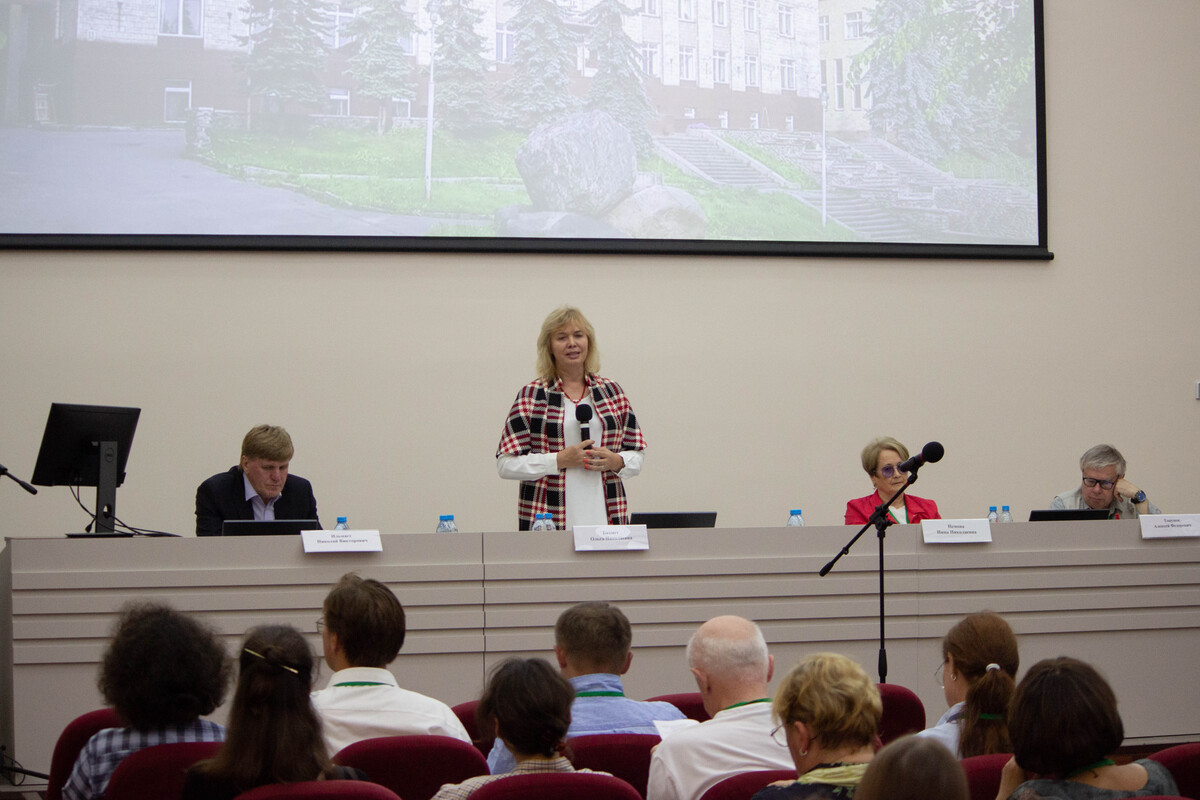
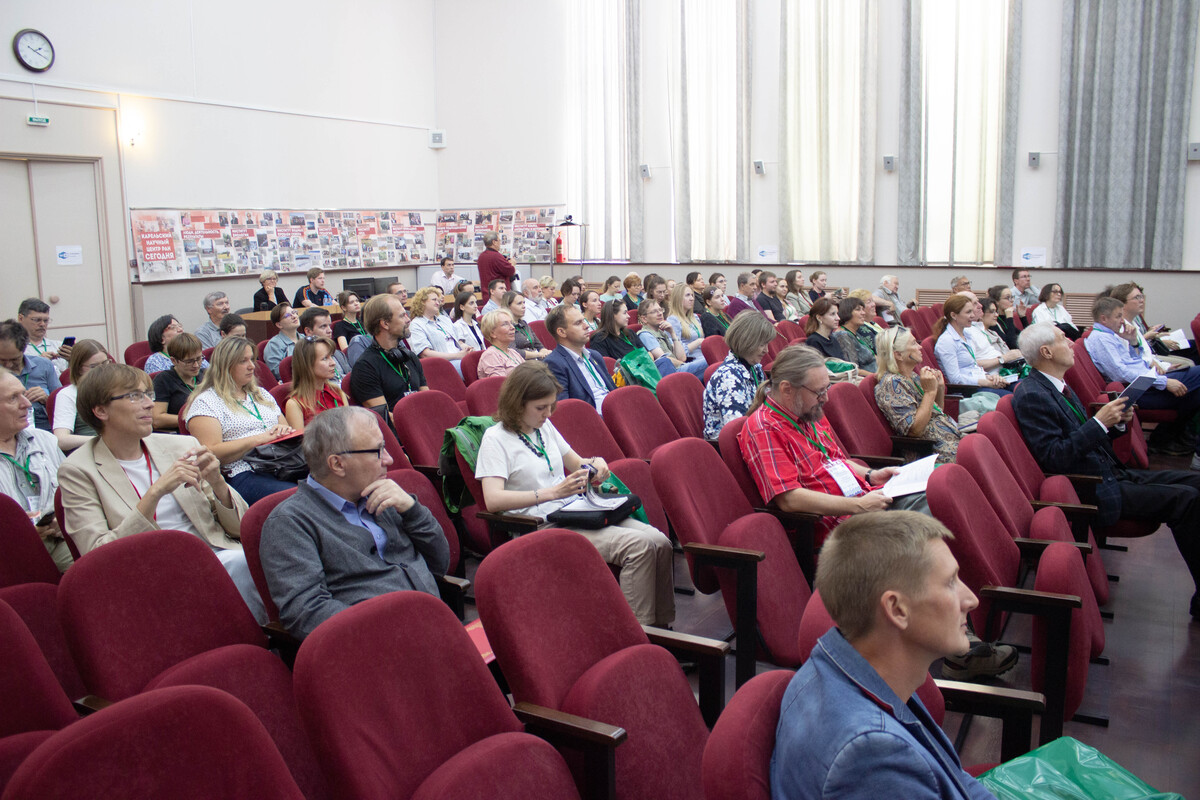
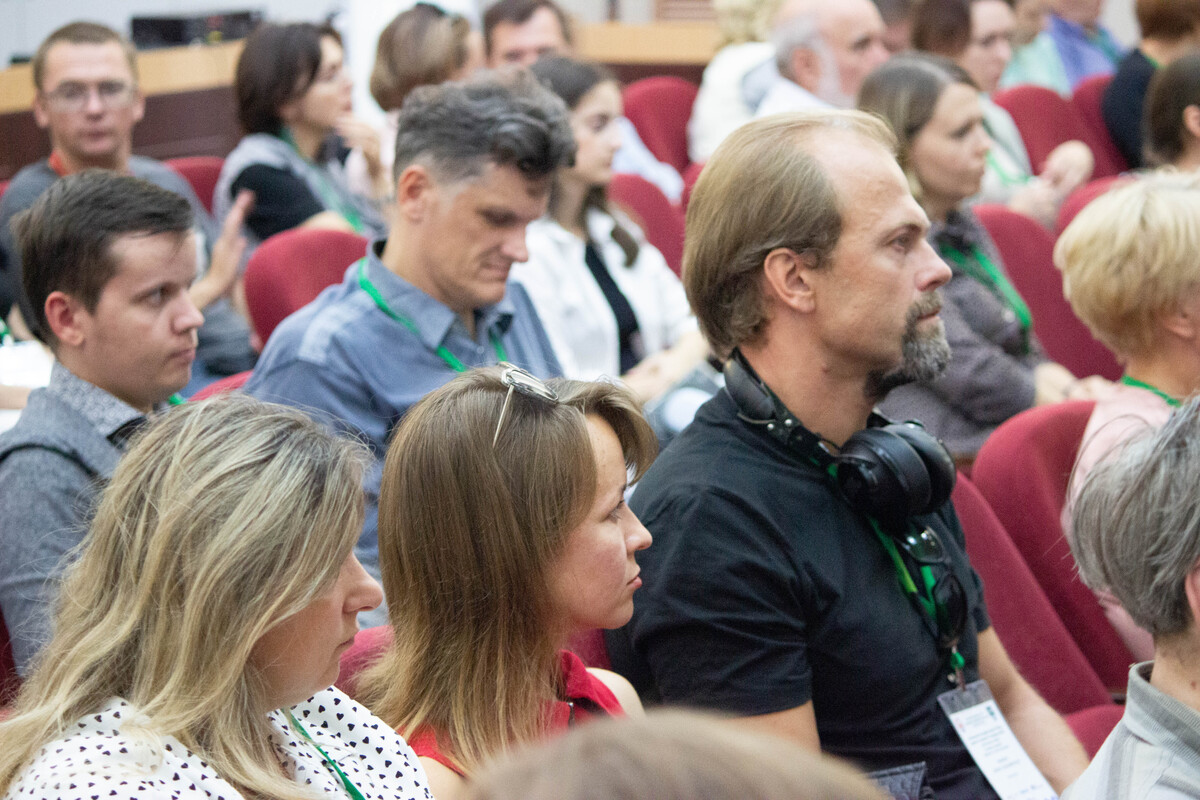
On 9th September, the All-Russian conference with international participation and the Young Scientists School “Basic and applied aspects of adaptation of living organisms to changing environments in the North” was opened at the Institute of Biology of the Karelian Research Centre RAS. The event has gathered over 130 participants from Moscow, St. Petersburg, Novosibirsk, Yekaterinburg, Irkutsk, Yakutsk, Ufa and other cities, as well as from Belarus and Kazakhstan. The conference themes include ecology, physiology and biochemistry of plants, animals and humans; ecosystem diversity and dynamics; sustainable nature management in the North, and biotechnologies.
KarRC RAS Director General Olga Bakhmet remarked that the thematic range of the conference permits presenting the extensive expertise of scientists from the Institute of Biology in the study of the adaptations of organisms, sharing ideas and exchanging experience with colleagues from other regions.
— Conferences on different dimensions of biological sciences are held every year. However, it was 20 years ago that such a large conference, gathering biologists specializing in different spheres, was last hosted by our institute. We have revived this conference, which is a good step. It is also a pleasure to see continuity between generations of scientists! — added Research Area Leader at KarRC RAS, RAS Academician Nina Nemova.
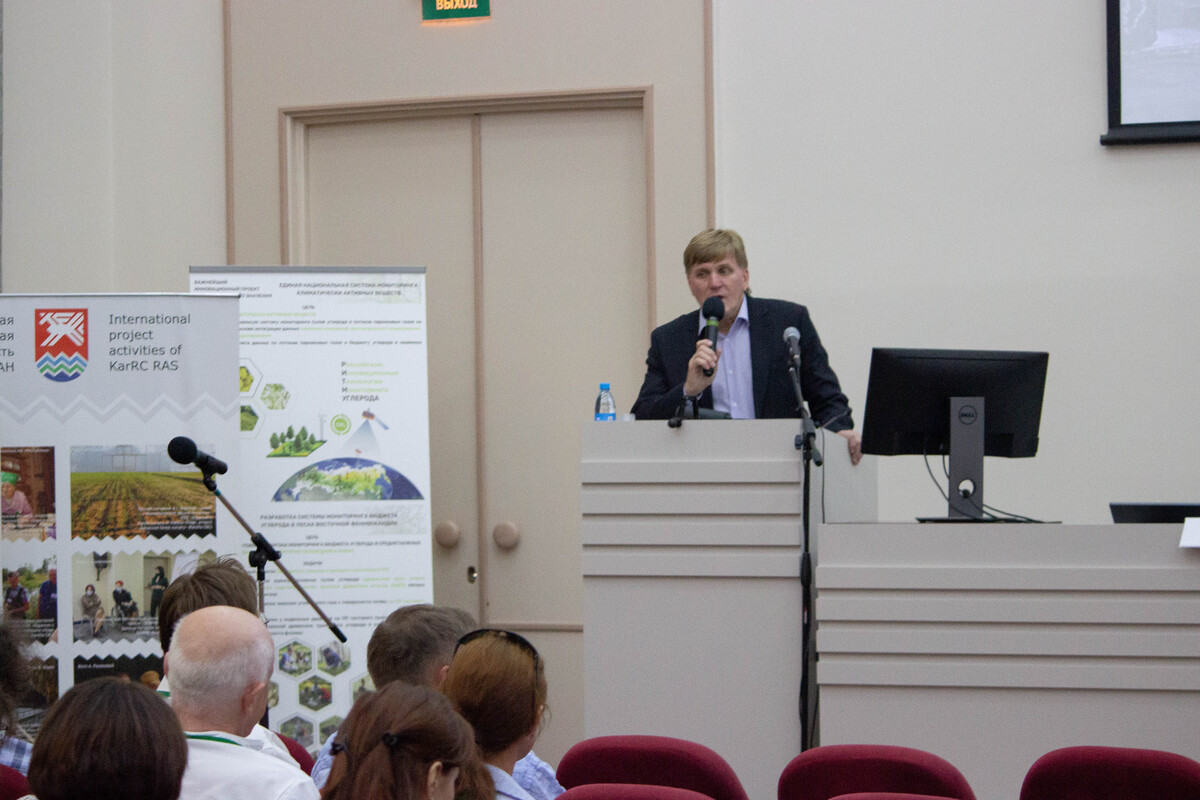
The first conference day was given to the plenary session with three keynote lectures: concerning research on adaptations in small mammals of the boreal zone; hemoglobin and its role in organism’s adaptation; ecological-biochemical adaptations in Arctic and sub-Arctic aquatic organisms.
RAS Academician Nina Nemova presented the research results of the Animal Ecological Biochemistry science school. Specialists at the Laboratory of Ecological Biochemistry study the adaptations of aquatic organisms of northern latitudes, which develop under relatively low temperatures, low water mineralization, constant seasonal fluctuations in environmental factors and long periods of poor food availability. The team studies the adaptive responses of fish, mollusks, and crustaceans based on more than a hundred biochemical and molecular genetic indicators.
The biochemist told about studies on the Atlantic salmon, Salmo salar L. Juveniles in different stages of the life cycle were analyzed and biochemical differentiation was detected in the populations already in the embryogenesis phase:
— The differentiation of biochemical qualities in salmonid young-of-the-year becomes obvious during embryogenesis already and further expressed in the larval stages, so when dispersing from the spawning redds, some of the hatched larvae have certain metabolic advantages enabling them to occupy the best nursery grounds, — explained Nina Nemova.
Owing to the knowledge derived from the study of wild salmon populations, the scientists could undertake a study of the development of salmonid young in aquaculture. These studies will enhance the survival rates of juveniles released from hatcheries engaged in artificial breeding and rearing of fish young, and will help work out some practical guidelines.
The Conference “Basic and applied aspects of adaptation of living organisms to changing environments in the North” will continue to 13th September. Eighty presentations will be made during the event, of which over 30 will be given by young scientists at the Young Scientists School.
International
News
September 9, 2024
This week, the results of research in ecology, physiology and biochemistry of plants, animals and humans will be presented and discussed at the Karelian Research Centre RAS. The conference “Basic and applied aspects of adaptation of living organisms to changing environments in the North” has gathered over 130 scientists from Russia, Belarus, Kazakhstan.


See also:

March 30, 2026
Young CIS scientists networked on common water problems at a school and workshop organized by the KarRC RAS
The international school and workshop “Under the Pressure of Global Climate Change: a Youth Network for Water Ecosystem Research” in Petrozavodsk has come to an end. During four days, young researchers from Russia, Belarus, Kyrgyzstan, Kazakhstan, Armenia, Uzbekistan, and Tajikistan listened to lectures and mastered scientific techniques in practice, under the guidance of seasoned experts. In conclusion, the participants agreed to maintain the network and keep looking for opportunities to jointly study common environmental problems.
The international school and workshop “Under the Pressure of Global Climate Change: a Youth Network for Water Ecosystem Research” in Petrozavodsk has come to an end. During four days, young researchers from Russia, Belarus, Kyrgyzstan, Kazakhstan, Armenia, Uzbekistan, and Tajikistan listened to lectures and mastered scientific techniques in practice, under the guidance of seasoned experts. In conclusion, the participants agreed to maintain the network and keep looking for opportunities to jointly study common environmental problems.

March 27, 2026
RAS Corr. Fellow Olga Bakhmet: Arctic biodiversity conservation is impossible without science as its foundation
The International Forum "Polar Bear Universe", organized by the Ministry of Natural Resources of Russia and the Government of the Chukotka Autonomous Okrug, is taking place in St. Petersburg. At the forum’s Bio-ecological Arctic Cluster, KarRC RAS leader, RAS Corr. Fellow Olga Bakhmet spoke about the scientific foundations for conserving Arctic biodiversity and presented the expertise of Karelian scientists in this field.
The International Forum "Polar Bear Universe", organized by the Ministry of Natural Resources of Russia and the Government of the Chukotka Autonomous Okrug, is taking place in St. Petersburg. At the forum’s Bio-ecological Arctic Cluster, KarRC RAS leader, RAS Corr. Fellow Olga Bakhmet spoke about the scientific foundations for conserving Arctic biodiversity and presented the expertise of Karelian scientists in this field.

March 26, 2026
Olga Bakhmet presented KarRC’s proposals for the federal Clean Ladoga project in St. Petersburg
Experts of the Karelian Research Centre RAS have prepared proposals for the federal project Clean Ladoga. The Centre’s CEO, Olga Bakhmet, presented them at a joint meeting of the Environmental Council under the Governor of St. Petersburg and the Public Environmental Council under the Governor of the Leningrad Region. The main point of her presentation was that the integrated program for the environmental rehabilitation of Lake Ladoga must encompass also the water bodies located throughout the lake’s catchment area.
Experts of the Karelian Research Centre RAS have prepared proposals for the federal project Clean Ladoga. The Centre’s CEO, Olga Bakhmet, presented them at a joint meeting of the Environmental Council under the Governor of St. Petersburg and the Public Environmental Council under the Governor of the Leningrad Region. The main point of her presentation was that the integrated program for the environmental rehabilitation of Lake Ladoga must encompass also the water bodies located throughout the lake’s catchment area.

March 24, 2026
A youth school and workshop on aquatic ecosystem studies gathers learners and lecturers from CIS countries at the KarRC RAS
The international school and workshop "Under the Pressure of Global Climate Change: a Youth Network for Aquatic Ecosystem Research" was launched in Petrozavodsk on March 24. Over four days, young researchers from Russia, Belarus, Kyrgyzstan, Kazakhstan, Armenia, Uzbekistan, and Tajikistan will engage in theoretical and practical training under the guidance of experts from the KarRC RAS and researchers from CIS countries, India, and China.
The international school and workshop "Under the Pressure of Global Climate Change: a Youth Network for Aquatic Ecosystem Research" was launched in Petrozavodsk on March 24. Over four days, young researchers from Russia, Belarus, Kyrgyzstan, Kazakhstan, Armenia, Uzbekistan, and Tajikistan will engage in theoretical and practical training under the guidance of experts from the KarRC RAS and researchers from CIS countries, India, and China.

March 16, 2026
Karelian entomologist, Andrei Humala, discovered six new species of parasitoid wasps last year
In 2025, entomologist from Karelia, Andrei Humala, described four new parasitoid wasp species from Africa. They all belong to a genus relatively rare in that region, Eusterinx. One more finding was made in each of samples from Mexico and Russian Far East. The scientist has specialized in the study of parasitoid wasps for over 30 years, during which time he has described 3 genera and 149 species new to science.
In 2025, entomologist from Karelia, Andrei Humala, described four new parasitoid wasp species from Africa. They all belong to a genus relatively rare in that region, Eusterinx. One more finding was made in each of samples from Mexico and Russian Far East. The scientist has specialized in the study of parasitoid wasps for over 30 years, during which time he has described 3 genera and 149 species new to science.