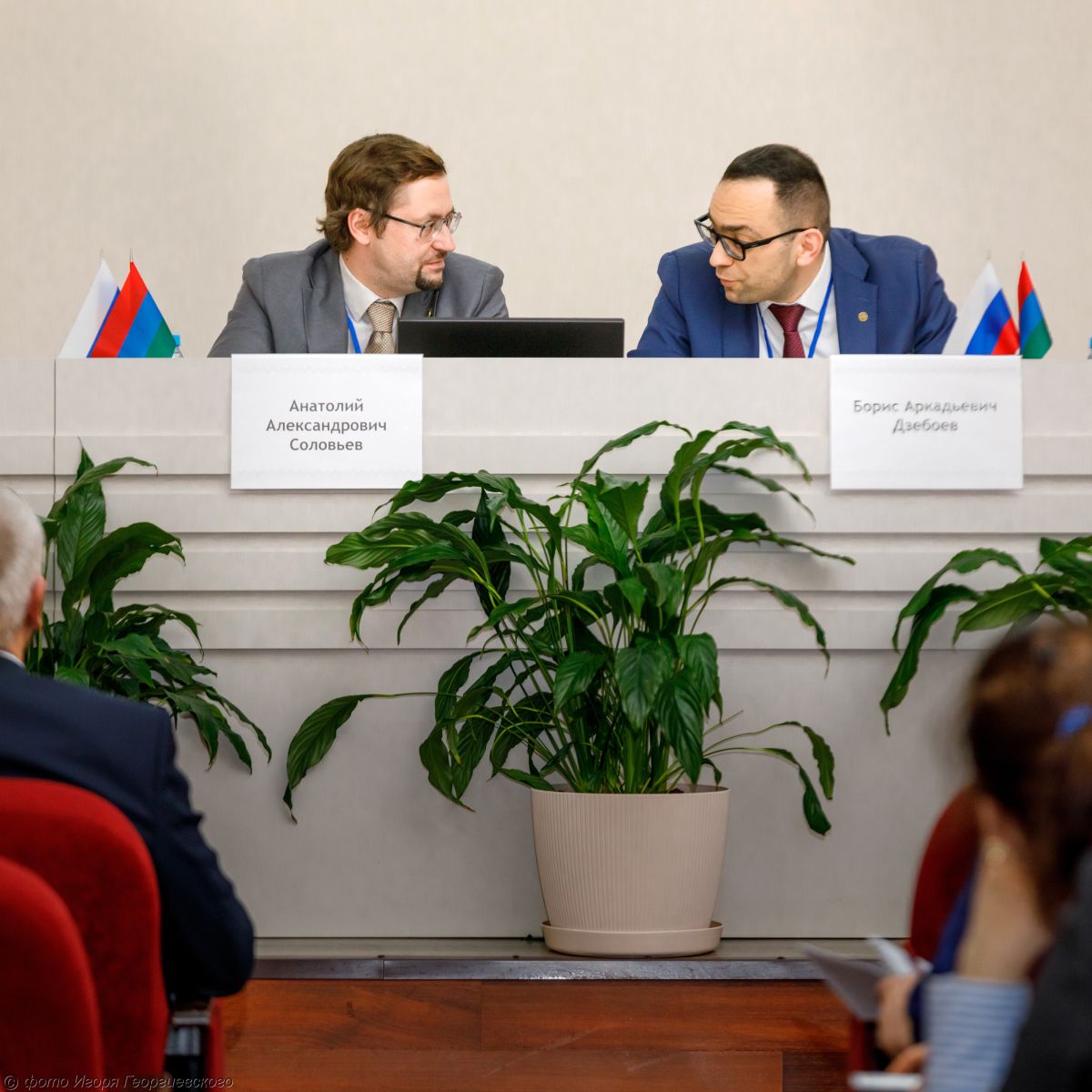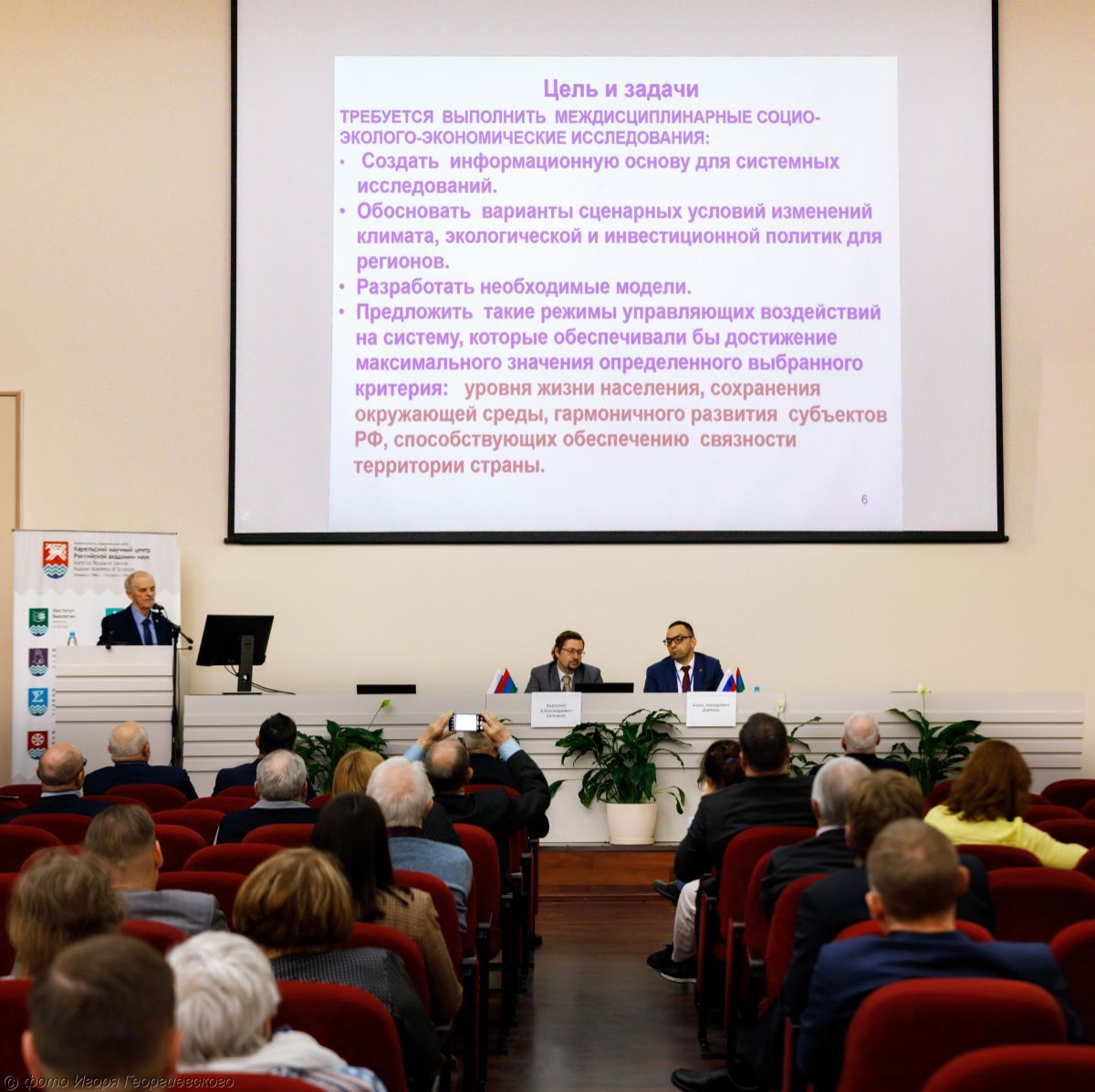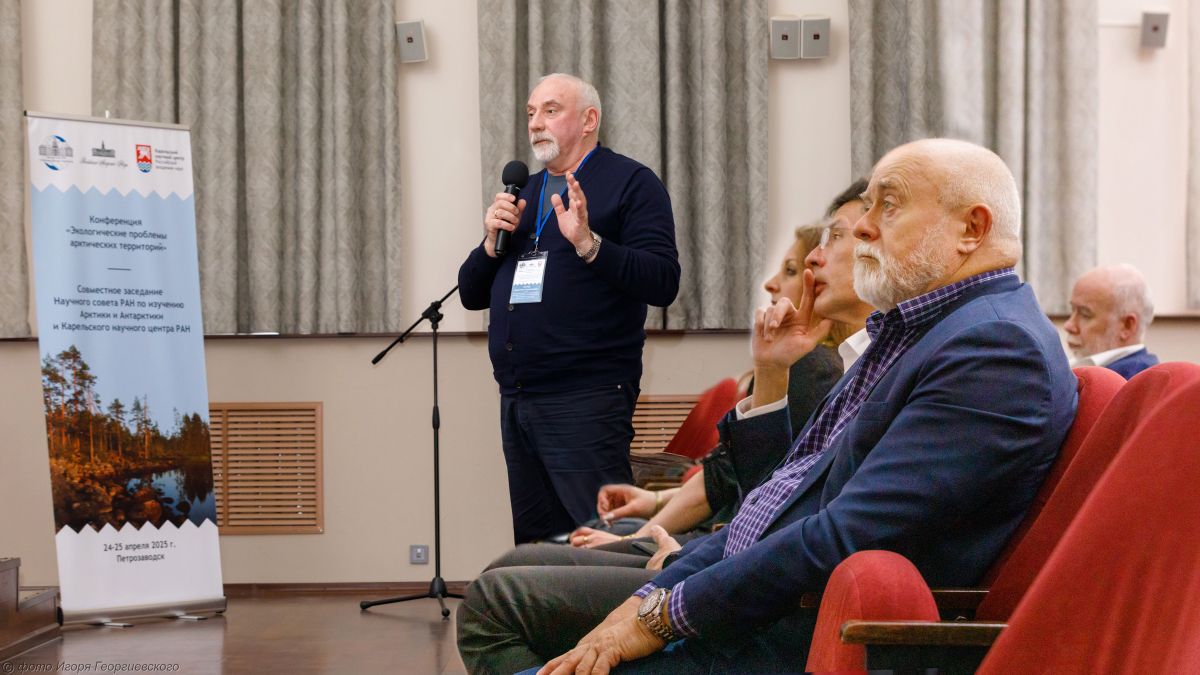


The session started with a talk by Boris Dzeboev, Secretary of the RAS Scientific Council for Arctic and Antarctic Studies, Deputy Director for Science of the RAS Geophysical Center. He reported on the activities of the Council in 2024 and the first quarter of the current year. Head of the St. Petersburg University of the State Fire Service of EMERCOM Russia Professor Bogdan Gavkalyuk presented the results and prospects of work of the university's competence center in the field of life safety in the Arctic and Antarctic.
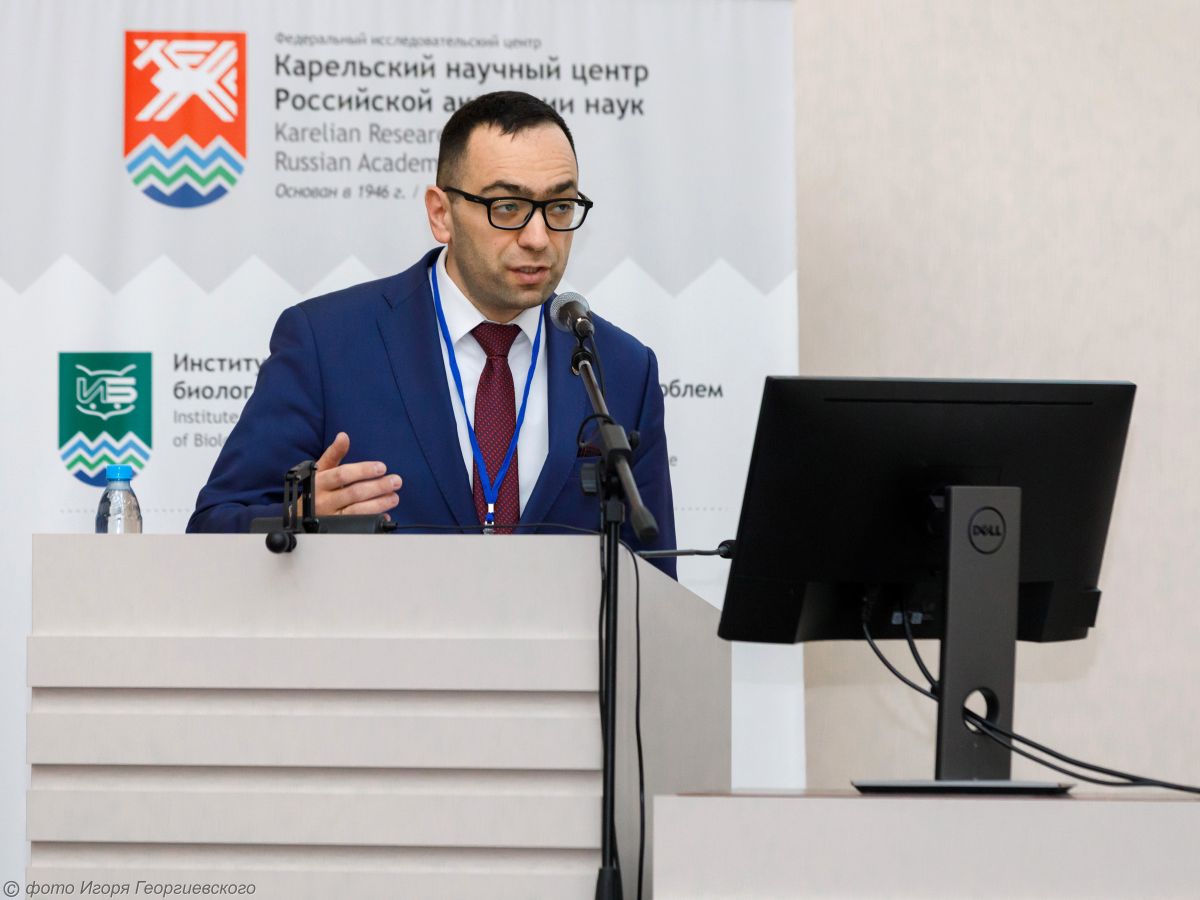
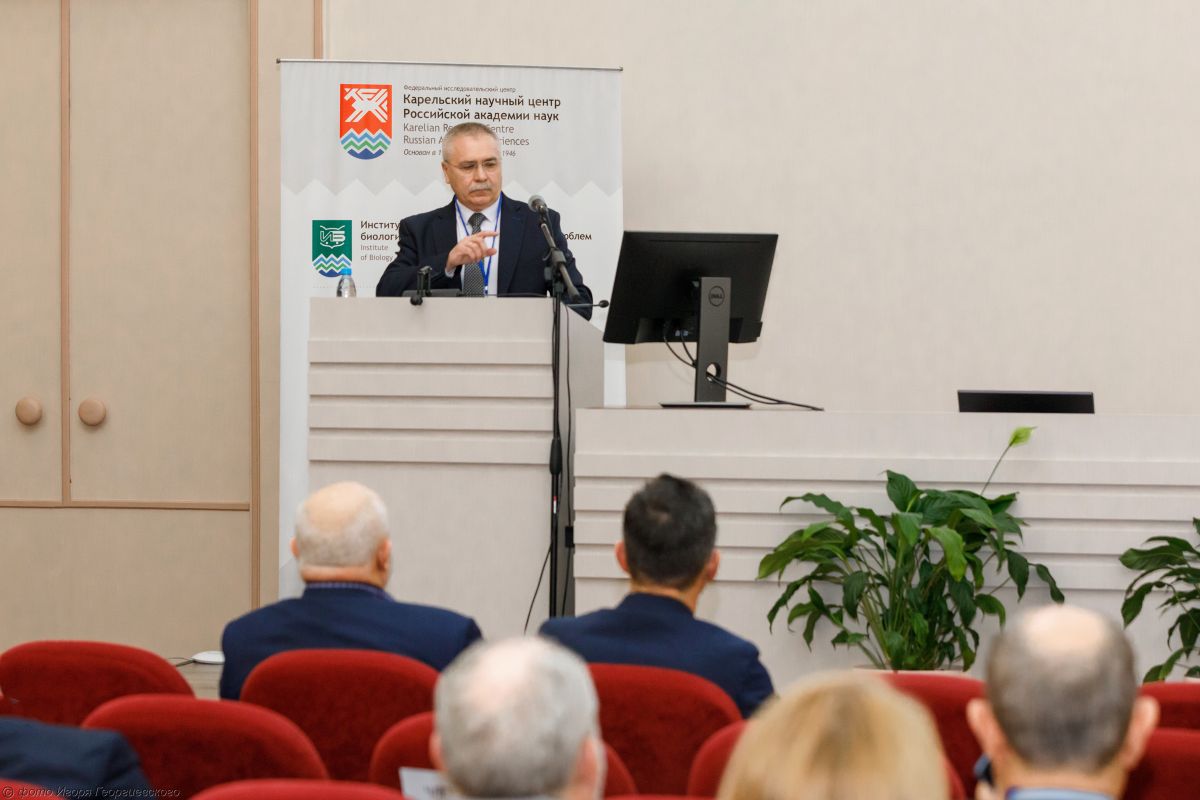
Secretary for Science of the RAS Scientific Council for Arctic and Antarctic Studies, Deputy Director for Science of the RAS Geophysical Center Boris Dzeboev
The core agenda of the meeting was presentations of employees of KarRC RAS scientific subdivisions. Specialists from the Northern Water Problems Institute (NWPI) KarRC RAS told about the results of studying water bodies, mainly the White Sea.
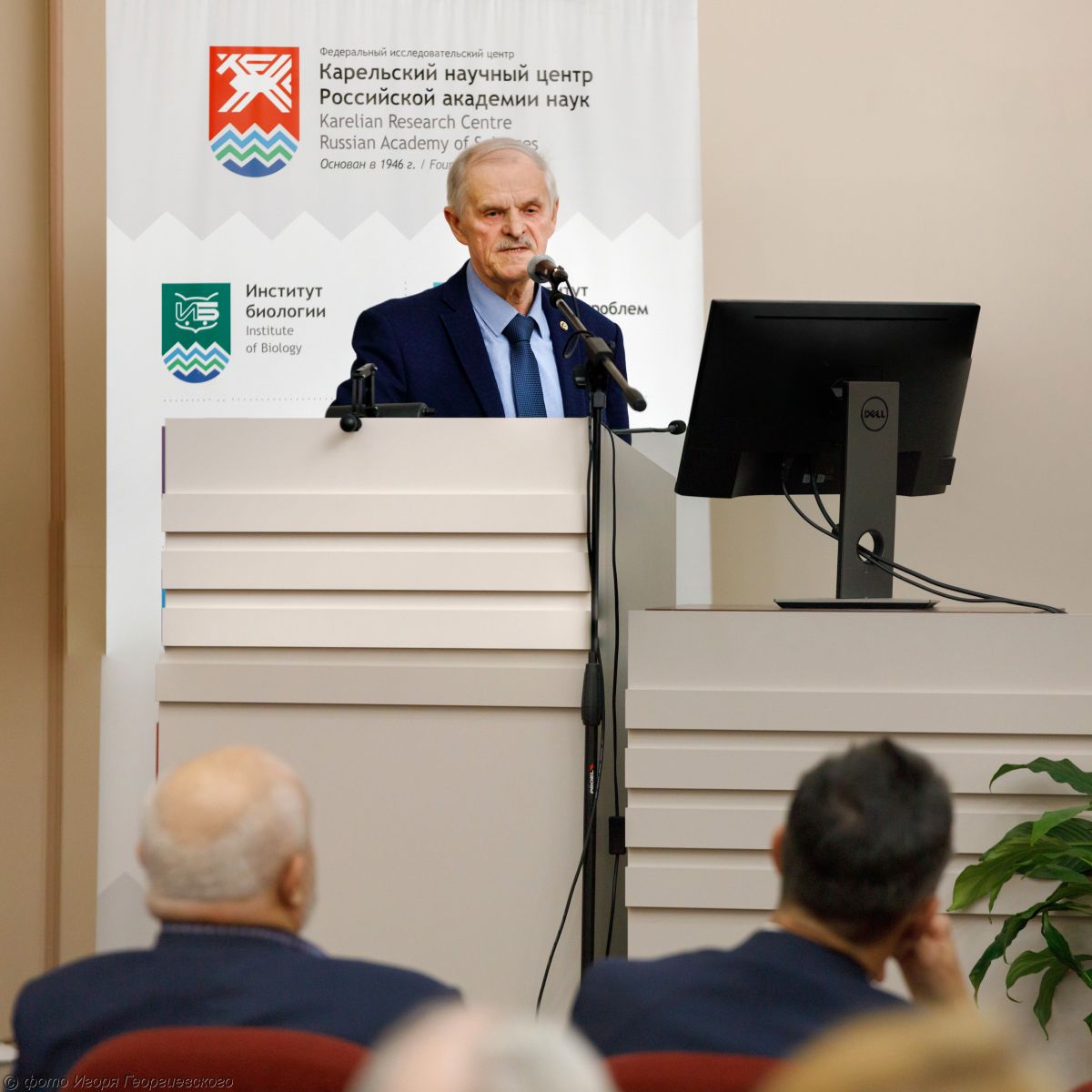
Principal Researcher of NWPI KarRC RAS, Corr. Academician Nikolai Filatov gave a detailed account of the development of support systems for decision-making on the social-ecological-economic system of the White Sea and Lake Onego and their catchments. In particular, an information and analytical system has been developed for the case of Lake Onego, which can be used to assess the current state and predict seasonal and long-term changes in the ecosystem. It is made up of coupled models of the lake and its catchment area. The main objective is conservation and sustainable use of the resources of this water body, which is of strategic importance for the republic and the country. This is the only prototype of such a system for large lakes in Russia.
Director of NWPI KarRC RAS Yulia Lukina delivered an assessment of the ecological state of the coastal water area of Solovetsky archipelago islands. The focus was on Blagopoluchia Bay, White Sea. The study began in 2024. A network of sampling stations was set up, the hydrodynamic regime of the bay was parameterized, the plankton community was described, and the trophic status (“highly eutrophic”) and water quality (“very dirty”) were assessed. Scientists have noted an increase in human pressure on the bay over the past 30 years. In April this year, the area was surveyed in winter. By way of recommendations on how to improve the situation, the researchers say it is necessary to establish a protected area and to build sewage treatment facilities.

Director of the Northern Water Problems Institute KarRC RAS Yulia Lukina
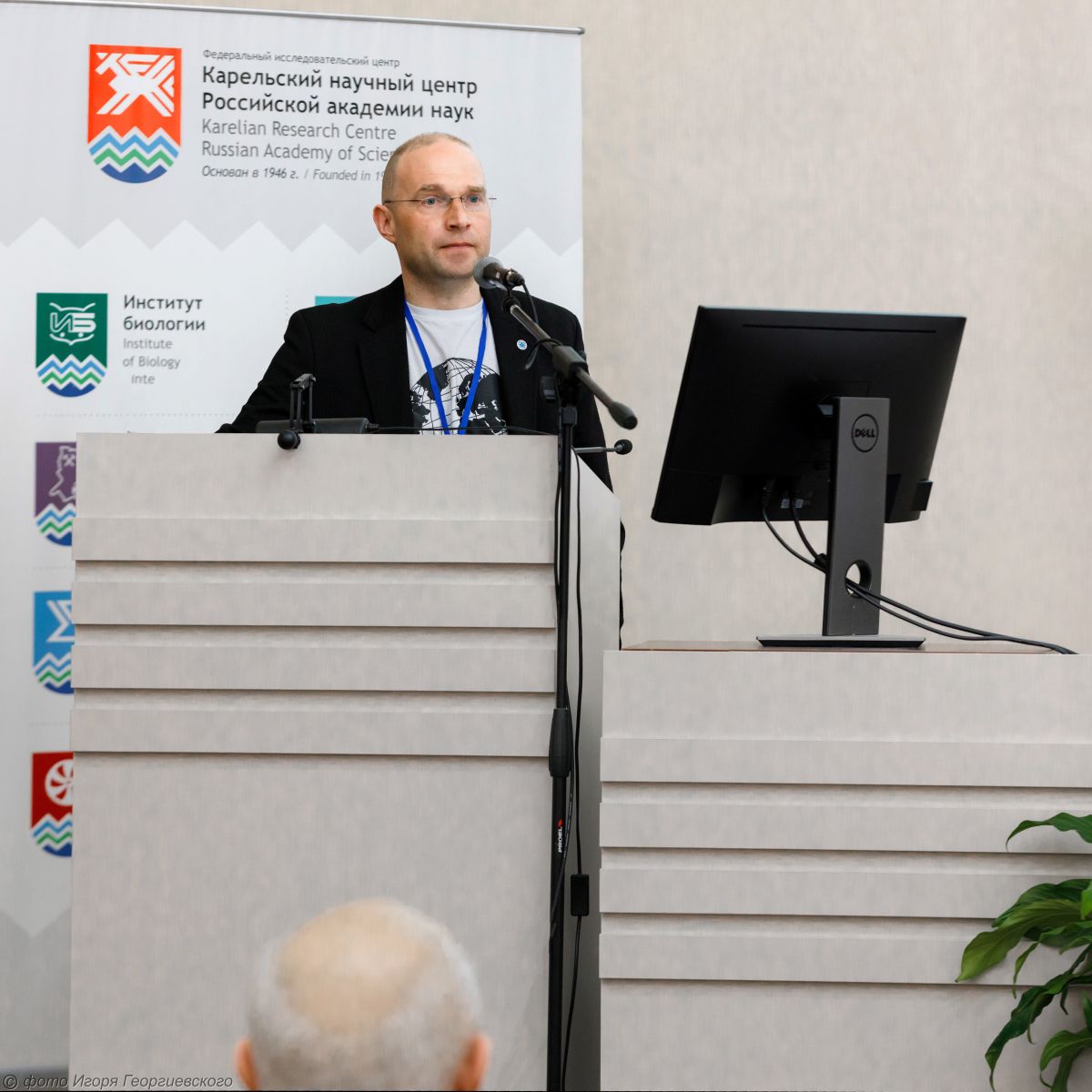
Alexey Tolstikov, Head of the Laboratory of Geography and Hydrology, NWPI KarRC RAS, presented multidisciplinary studies of the White Sea and its catchment area. His co-speaker was Ilya Chernov, Senior Researcher of the Institute of Applied Mathematical Research. The scientists have developed a 3D mathematical model JASMINE, which describes the water and ice dynamics of the White Sea. Hydrologists are now studying the estuaries of the rivers draining into the sea to assess the ecological situation in its catchment.
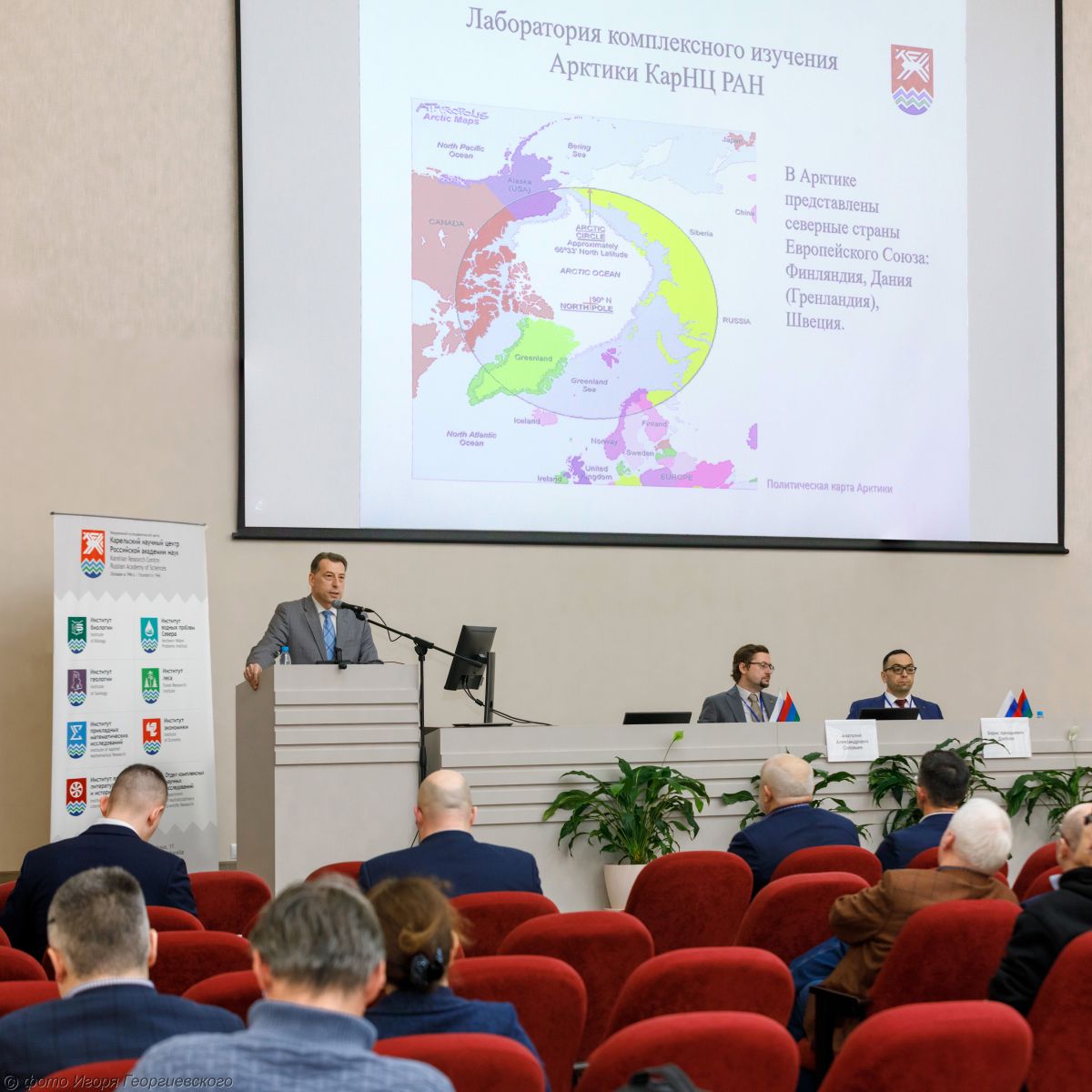
Environmental aspects of the European Union's Arctic policy were the subject of the presentation by Dmitry Bazegsky, Head of the new Laboratory for Integrated Arctic Studies of the Department for Multidisciplinary Research KarRC RAS.
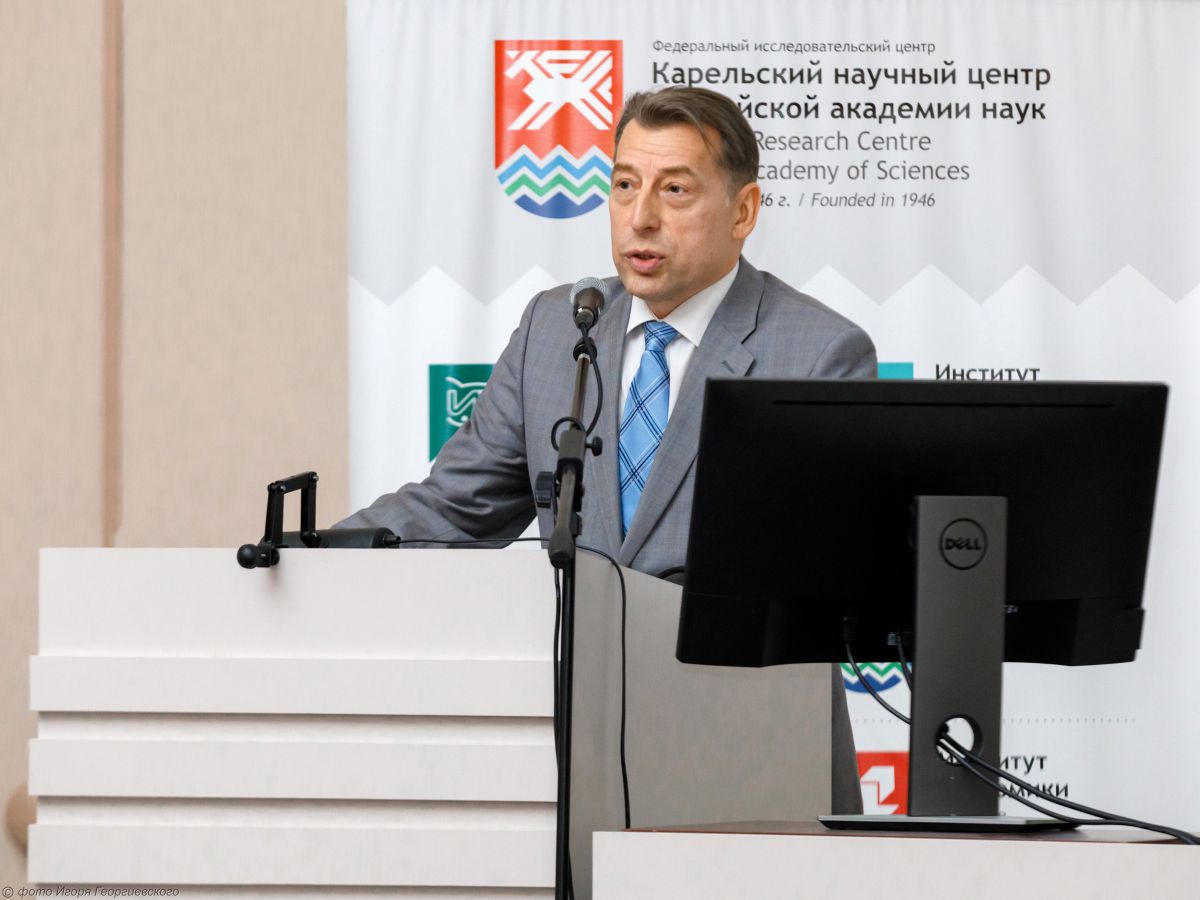
Dmitry Bazegsky, Head of the Laboratory for Integrated Arctic Studies, KarRC RAS
Senior Researcher of DMR KarRC RAS Pavel Ryazantsev spoke about the results of studying palsa bogs in the Murmansk region and presented a forecast of changes in the southern boundary of the permafrost zone on the Kola Peninsula based on the map that has been compiled. Thawing of the frozen cores of palsa mounds can serve as an important indicator of climate change and a basis for the development of climate scenarios for the Arctic.
The last presentation in the series was made by Maria Pitukhina, Leading Researcher of the Institute of Economics KarRC RAS. The scientists focused on interactions with China within the Polar Silk Road framework, which implies China's use of Arctic shipping routes. The scientist presented the research results in the context of monitoring and forecasting the ice conditions along the Northern Sea Route.
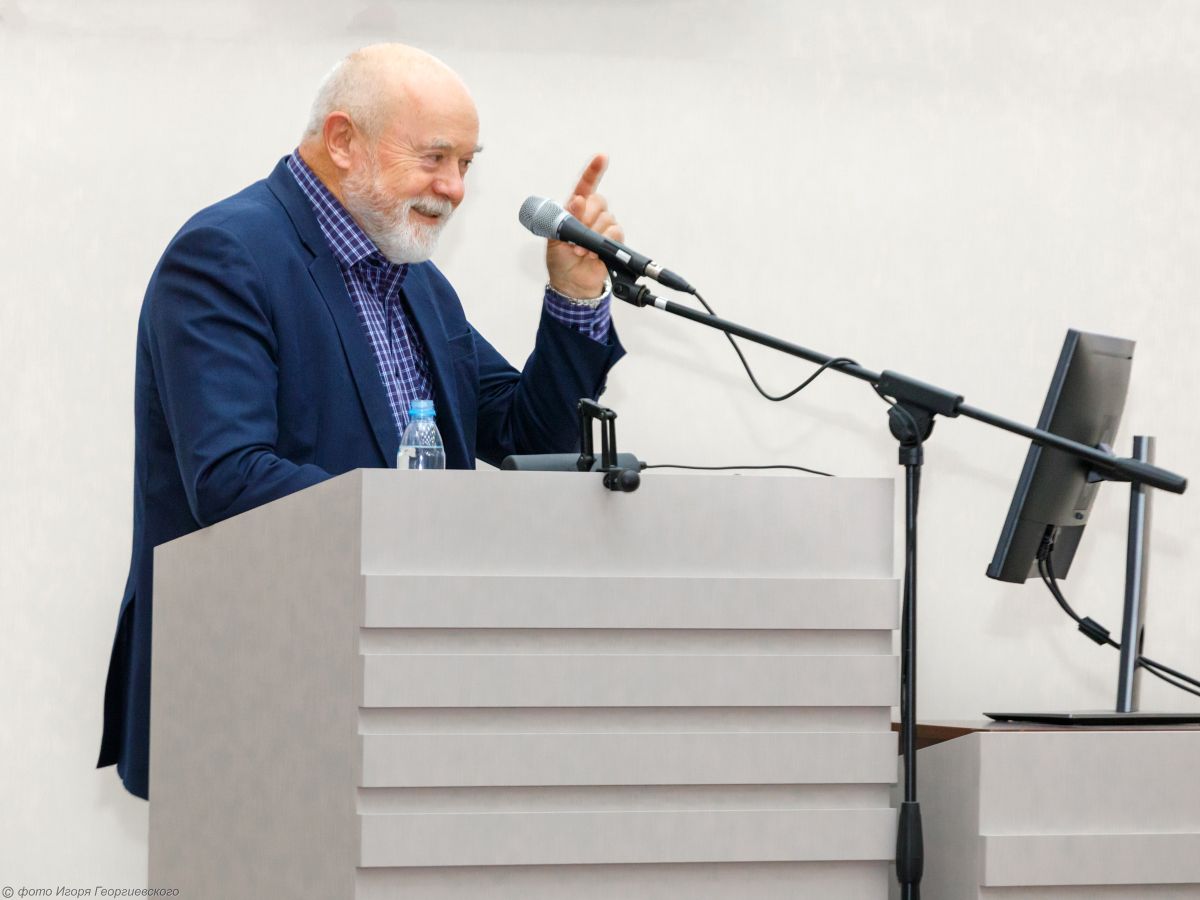
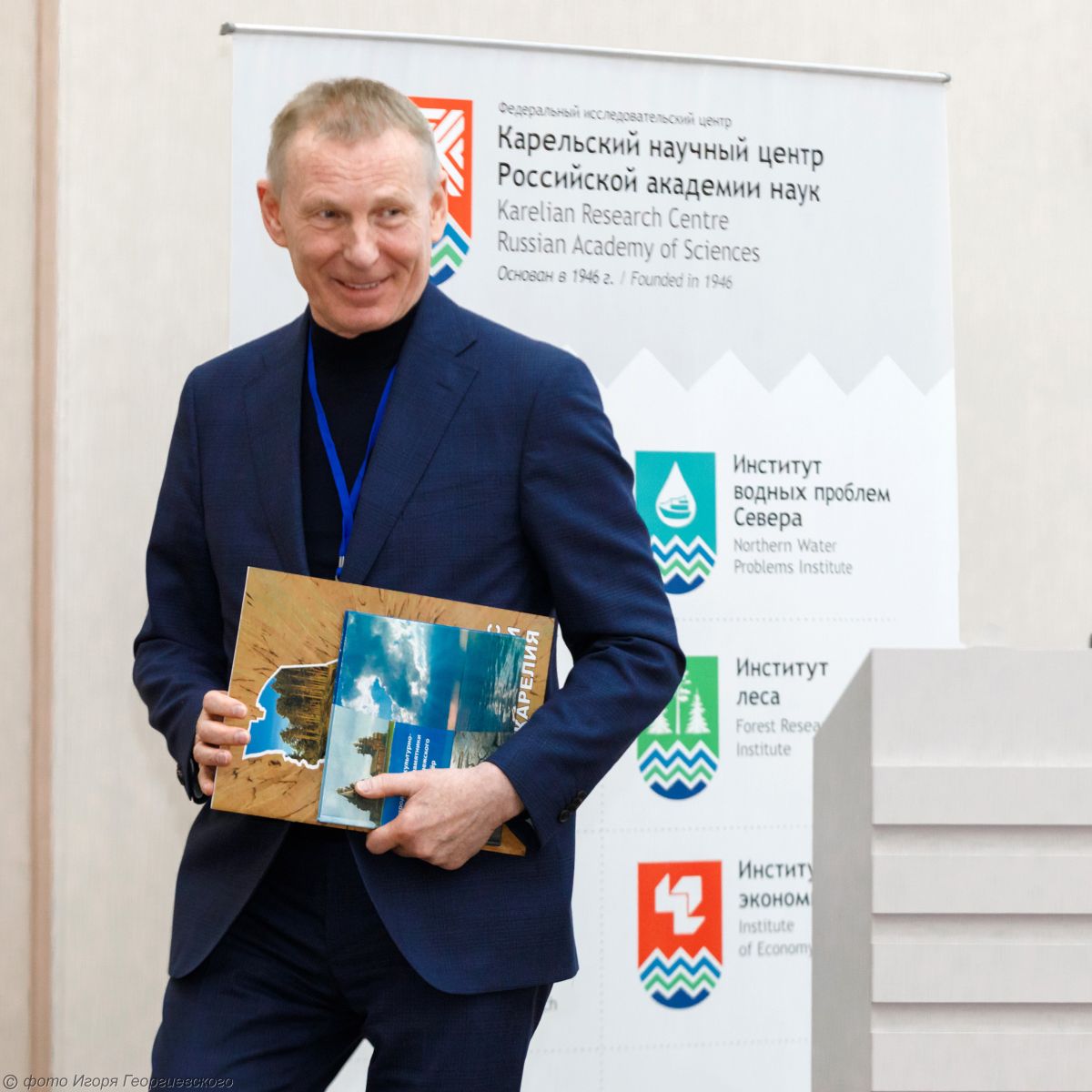
Scientific Director of the Institute of Geology and Mineralogy of the Siberian Branch RAS, Academician Nikolai Pokhilenko
During the discussion, Council members exchanged opinions on the session and the scientific component of the country's Arctic agenda in general. Having given tribute to the studies presented, Scientific Director of the Institute of Geology and Mineralogy of the Siberian Branch RAS, Academician Nikolai Pokhilenko emphasized the need to relocate certain elements of research to the eastern - vast, sparsely populated and poorly studied - parts of the Arctic. The scientist believes that Karelian specialists could contribute their expertise to this work.
Director of the RAS United Geophysical Survey Yuri Vinogradov reminded that one of the key topics announced for this external session was natural and man-made hazards in the Russian Arctic Zone.
– It is necessary to develop monitoring systems that will help to identify hazards and prevent damage. Timely research monitoring is needed to prevent accidents and possible consequences, – he stressed.
The Council members also discussed the prospects and challenges for participation of scientific organizations in the implementation of government programs related to Arctic development.
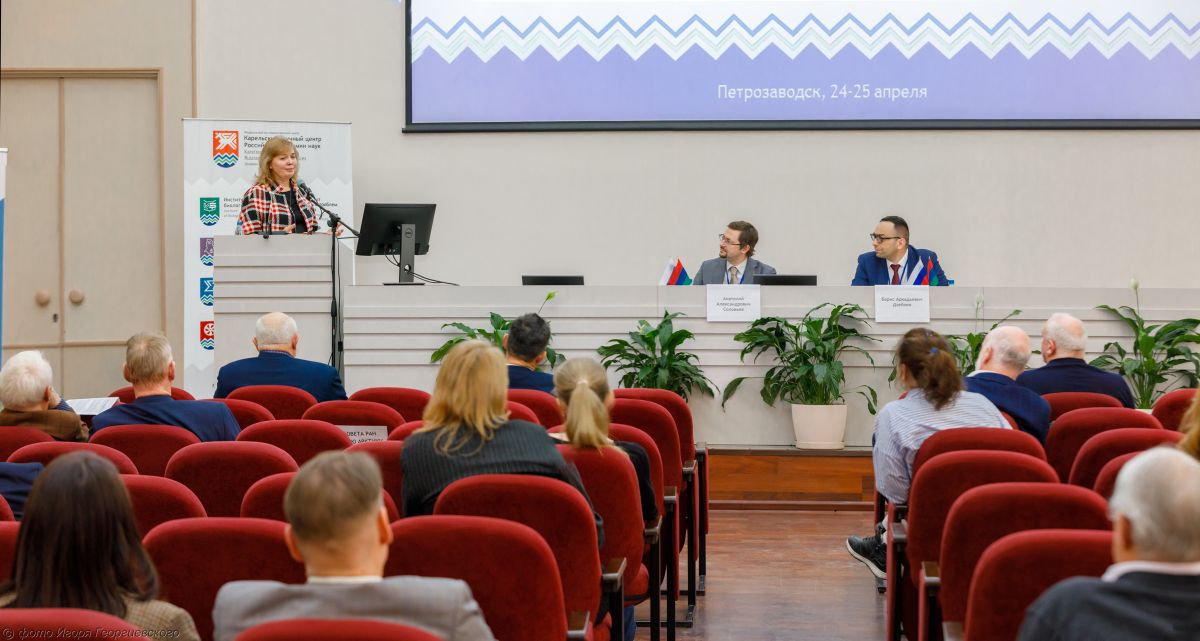
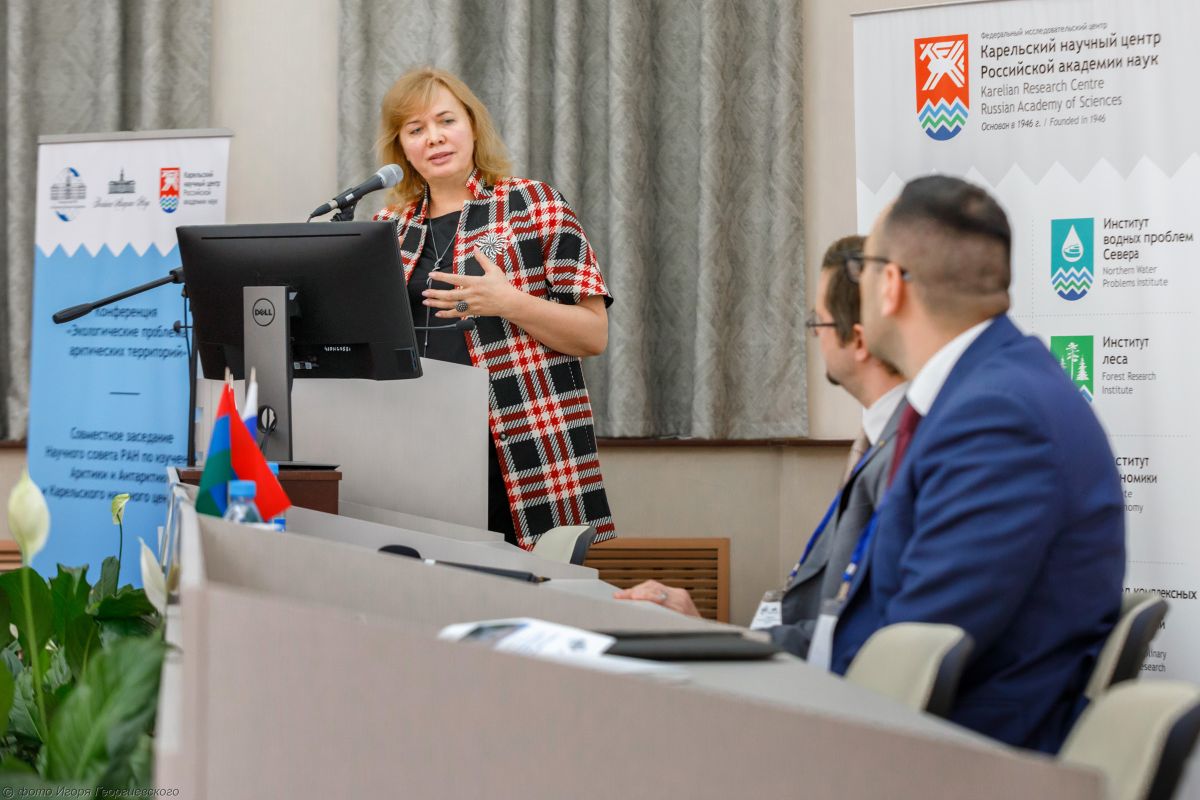
KarRC RAS Director General, Corr. Academician Olga Bakhmet
KarRC RAS Director General, Corresponding Academician Olga Bakhmet came forward with a proposal to organize networking on the Arctic theme.
– When creating integrated programs, we need to understand who is doing what and to move forward complementing each other rather than competing. To build such a program, we need platforms for discussion. Naturally, there is no substitute for in-person communication, but to keep momentum between meetings, online communication can be used as a way to collaborate quickly by setting up taskforces, – remarked Olga Bakhmet.
By way of example, she referred to the experience of KarRC RAS in collaborating with BRICS countries. The resolution of last year's conference on regional cooperation in the BRICS includes the establishment of a platform for international networking on environmental issues. Technical arrangements for this task are currently underway.
The session was wrapped up by the Acting Chairman of the RAS Scientific Council for Arctic and Antarctic Studies, Director of the RAS Geophysical Institute, Corresponding Academician Anatoly Soloviev. He specifically noted the participation in the events of the President of the Kurchatov Institute Mikhail Kovalchuk, considering it a sign of strengthening ties between this research center and the Russian Academy of Sciences, and concurred to the high appraisal of Karelian Research Center's activities expressed by the Academy members.
– The members of the Scientific Council shall recognize the successful work of the Karelian Research Center RAS and wish our colleagues further advancements on all the numerous research tracks, – concluded Anatoly Soloviev.
Photos: Igor Georgievskii / KarRC RAS