


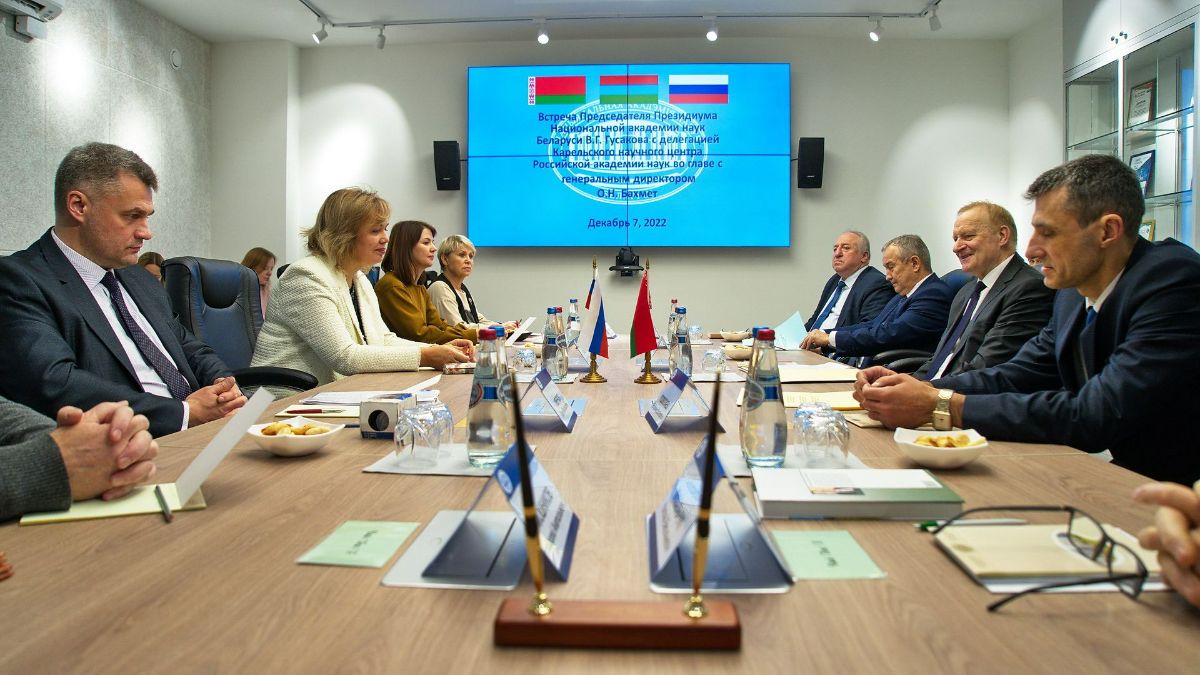
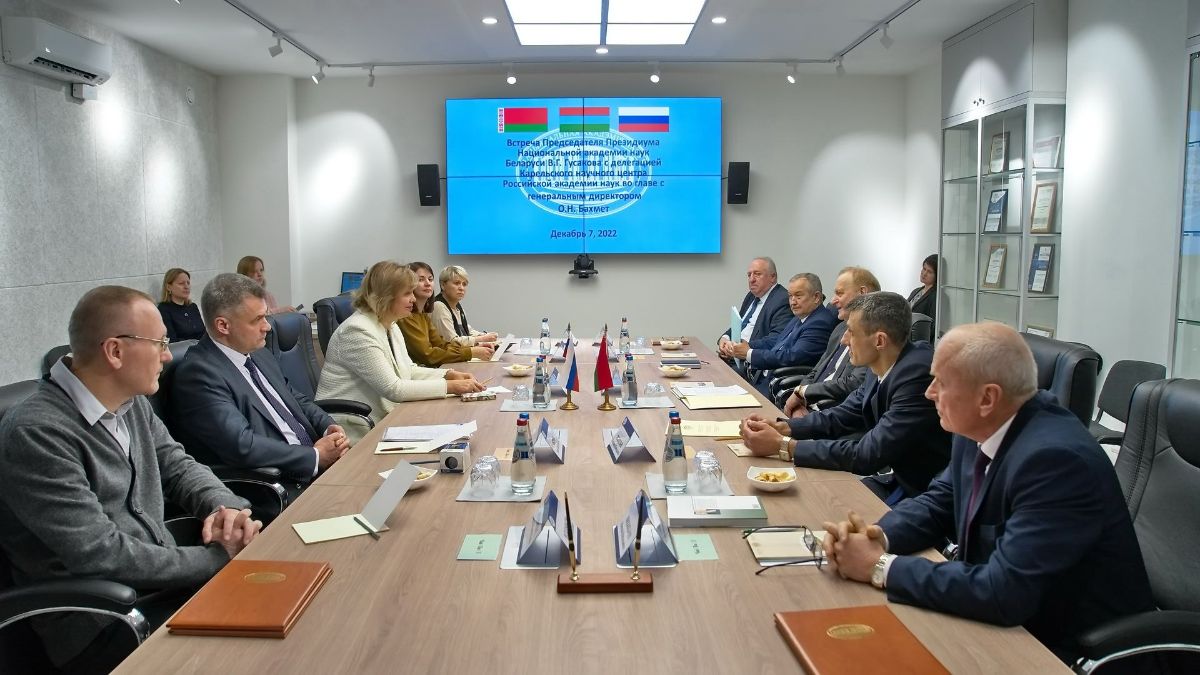
Representatives of KarRC RAS headed by the Director General Olga Bakhmet visited the Republic of Belarus within the Karelian delegation on December 6-9. One of the main events was a meeting with the Chairman of the Presidium of the National Academy of Sciences (NAS) of the Republic of Belarus Vladimir Gusakov. The leaders discussed the development of cooperation in the field of biotechnology and agriculture in the framework of the InterAcademy Council of the Union State. The participants arrived at the conclusion about the need to create a joint research program. It is going to be worked out in the nearest future.
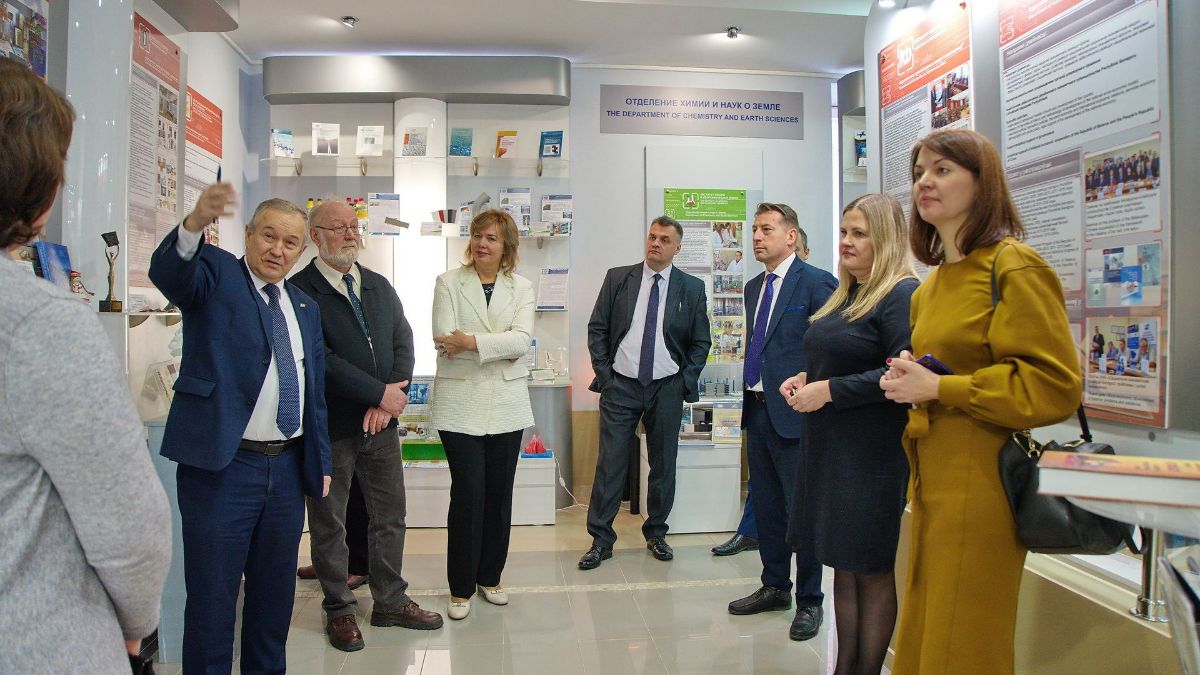
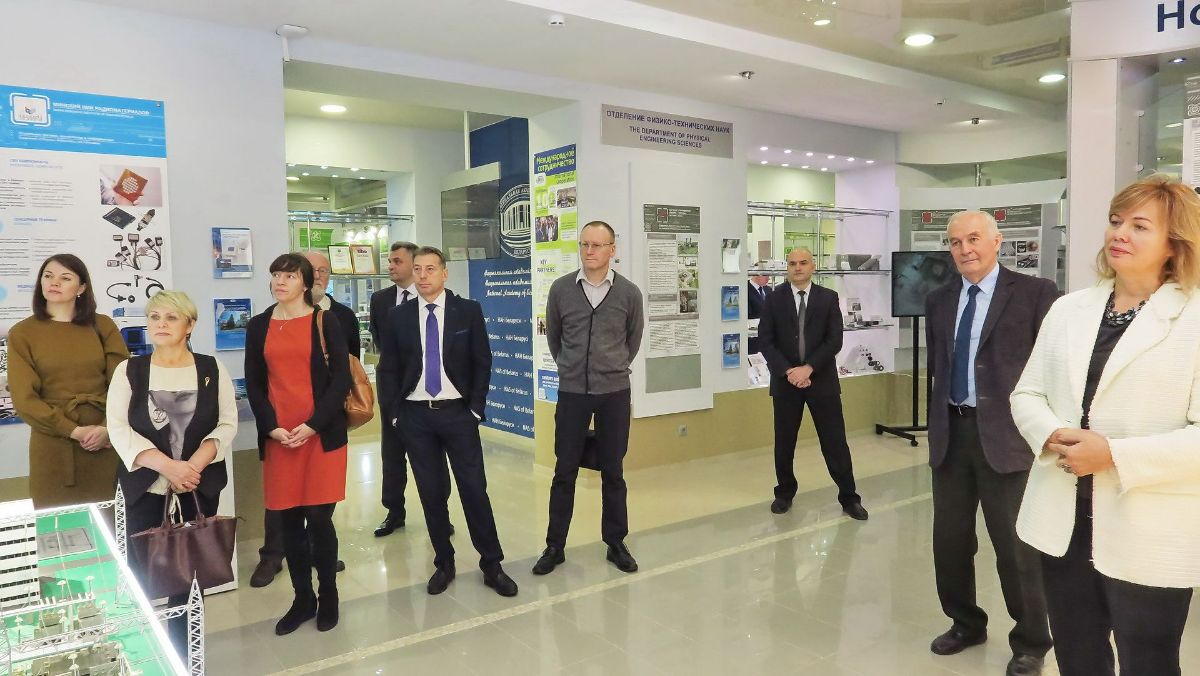
As regards the development of individual areas, they considered the implementation of a project on deep processing of peat, joint development of seed potato breeding, studies of Belarusian culture in Karelia. These issues were discussed in more detail during the visits of Karelian researchers to the country's leading scientific and educational organizations, including: NAS Institute of Nature Management, NAS Scientific and Practical Center for Bioresources, NAS Scientific and Practical Center for Potato, Fruit and Vegetable Growing, NAS Institute of Experimental Botany named after K.Kuprevich, NAS Institute of Genetics and Cytology.
The Karelian delegation also took part in events organized at the Ministry of Forestry of the Republic of Belarus. Some of the areas experts named as promising for cooperation are the establishment of forest crops, forestry mechanization, alignment of the forest age structure, and exchange of expertise in intensive forestry.
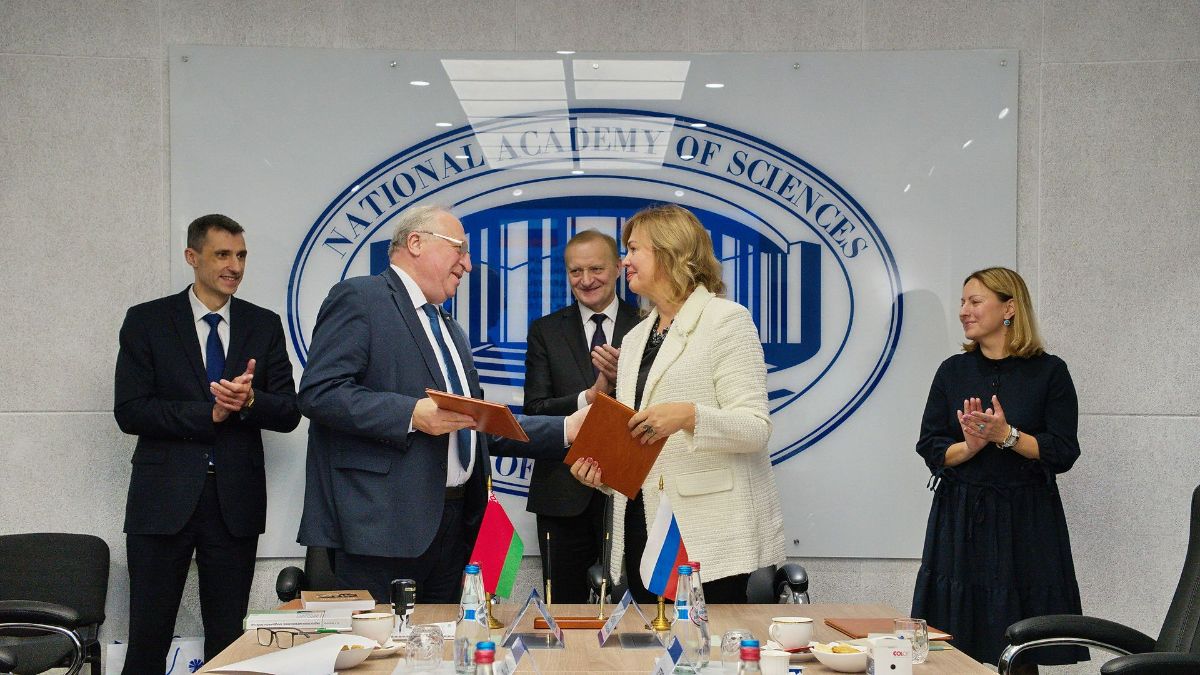
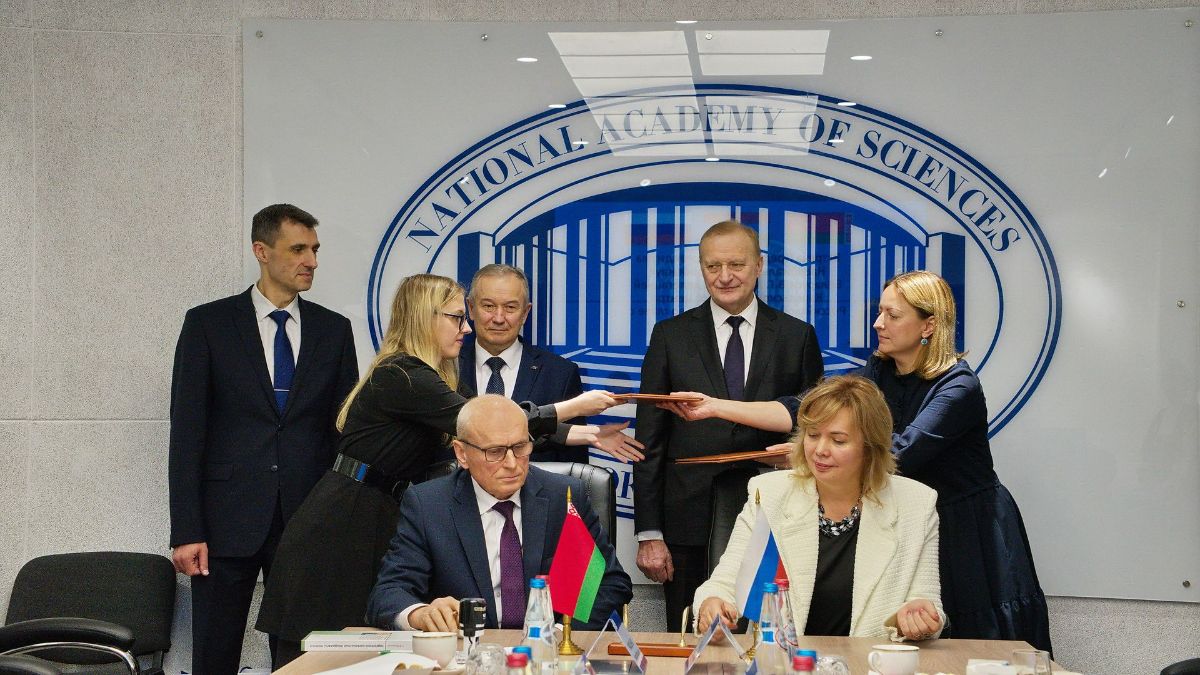
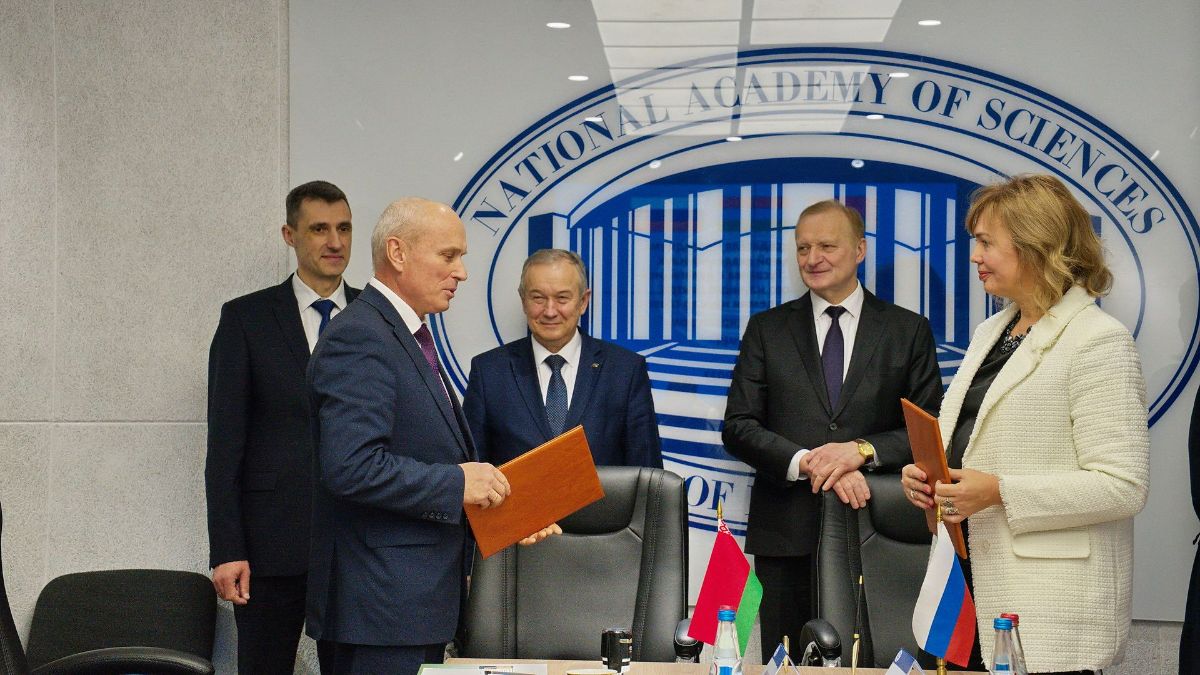
As a result of the visit, several cooperation agreements were made. In particular, joint activities will be carried out with the Center for the Belarusian Culture, Language and Literature Research of the National Academy of Sciences of Belarus. This includes preparation of joint projects, participation in seminars and conferences, exchange of specialists and research results. Similar agreements on the relevant areas of activity have also been signed with the Belarus State Economic University and the Polesie Agrarian Ecological Institute of Belarus NAS.
One of the priority areas for future cooperation is the study of mire systems. Karelian Research Centre RAS is home to one of the leading mire science schools in Russia. The parties have agreed to implement a comparative study of the mire ecosystem diversity, classification and mapping of vegetation, study of sound use of peatlands, peat deposition and carbon accumulation processes in different types of mires in the two regions. Representatives of the organizations also discussed research of curly birch, biotechnology issues, possible joint activities in the Arctic.
– Karelia and Belarus have many areas of mutual interest in the scientific sphere. We have a great potential for joint work in the study of mire systems, design and application of biotechnologies in agriculture. We have experience in studying ethno-cultural identities. All these and other areas should be expanded and promoted. Our trip to Minsk provided an impetus for such work. We look forward to new meetings with our colleagues next year, where we can discuss concrete projects and research more specifically", commented Olga Bakhmet, KarRC RAS Director General recapitulating on the visit.
Photos by Alexander Morunov / Belarus NAS
International
News
December 22, 2022
Karelian Research Center RAS has signed agreements on cooperation with scientific and educational organizations of the Republic of Belarus. Scientists will cooperate in the fields of economics, humanities and natural sciences. Special focus is on the study of mire and forest ecosystems and development of biotechnology in agriculture. Signing of the documents took place during the visit of KarRC RAS delegation to Minsk.
See also:

March 30, 2026
Young CIS scientists networked on common water problems at a school and workshop organized by the KarRC RAS
The international school and workshop “Under the Pressure of Global Climate Change: a Youth Network for Water Ecosystem Research” in Petrozavodsk has come to an end. During four days, young researchers from Russia, Belarus, Kyrgyzstan, Kazakhstan, Armenia, Uzbekistan, and Tajikistan listened to lectures and mastered scientific techniques in practice, under the guidance of seasoned experts. In conclusion, the participants agreed to maintain the network and keep looking for opportunities to jointly study common environmental problems.
The international school and workshop “Under the Pressure of Global Climate Change: a Youth Network for Water Ecosystem Research” in Petrozavodsk has come to an end. During four days, young researchers from Russia, Belarus, Kyrgyzstan, Kazakhstan, Armenia, Uzbekistan, and Tajikistan listened to lectures and mastered scientific techniques in practice, under the guidance of seasoned experts. In conclusion, the participants agreed to maintain the network and keep looking for opportunities to jointly study common environmental problems.

March 27, 2026
RAS Corr. Fellow Olga Bakhmet: Arctic biodiversity conservation is impossible without science as its foundation
The International Forum "Polar Bear Universe", organized by the Ministry of Natural Resources of Russia and the Government of the Chukotka Autonomous Okrug, is taking place in St. Petersburg. At the forum’s Bio-ecological Arctic Cluster, KarRC RAS leader, RAS Corr. Fellow Olga Bakhmet spoke about the scientific foundations for conserving Arctic biodiversity and presented the expertise of Karelian scientists in this field.
The International Forum "Polar Bear Universe", organized by the Ministry of Natural Resources of Russia and the Government of the Chukotka Autonomous Okrug, is taking place in St. Petersburg. At the forum’s Bio-ecological Arctic Cluster, KarRC RAS leader, RAS Corr. Fellow Olga Bakhmet spoke about the scientific foundations for conserving Arctic biodiversity and presented the expertise of Karelian scientists in this field.

March 26, 2026
Olga Bakhmet presented KarRC’s proposals for the federal Clean Ladoga project in St. Petersburg
Experts of the Karelian Research Centre RAS have prepared proposals for the federal project Clean Ladoga. The Centre’s CEO, Olga Bakhmet, presented them at a joint meeting of the Environmental Council under the Governor of St. Petersburg and the Public Environmental Council under the Governor of the Leningrad Region. The main point of her presentation was that the integrated program for the environmental rehabilitation of Lake Ladoga must encompass also the water bodies located throughout the lake’s catchment area.
Experts of the Karelian Research Centre RAS have prepared proposals for the federal project Clean Ladoga. The Centre’s CEO, Olga Bakhmet, presented them at a joint meeting of the Environmental Council under the Governor of St. Petersburg and the Public Environmental Council under the Governor of the Leningrad Region. The main point of her presentation was that the integrated program for the environmental rehabilitation of Lake Ladoga must encompass also the water bodies located throughout the lake’s catchment area.

March 24, 2026
A youth school and workshop on aquatic ecosystem studies gathers learners and lecturers from CIS countries at the KarRC RAS
The international school and workshop "Under the Pressure of Global Climate Change: a Youth Network for Aquatic Ecosystem Research" was launched in Petrozavodsk on March 24. Over four days, young researchers from Russia, Belarus, Kyrgyzstan, Kazakhstan, Armenia, Uzbekistan, and Tajikistan will engage in theoretical and practical training under the guidance of experts from the KarRC RAS and researchers from CIS countries, India, and China.
The international school and workshop "Under the Pressure of Global Climate Change: a Youth Network for Aquatic Ecosystem Research" was launched in Petrozavodsk on March 24. Over four days, young researchers from Russia, Belarus, Kyrgyzstan, Kazakhstan, Armenia, Uzbekistan, and Tajikistan will engage in theoretical and practical training under the guidance of experts from the KarRC RAS and researchers from CIS countries, India, and China.

March 16, 2026
Karelian entomologist, Andrei Humala, discovered six new species of parasitoid wasps last year
In 2025, entomologist from Karelia, Andrei Humala, described four new parasitoid wasp species from Africa. They all belong to a genus relatively rare in that region, Eusterinx. One more finding was made in each of samples from Mexico and Russian Far East. The scientist has specialized in the study of parasitoid wasps for over 30 years, during which time he has described 3 genera and 149 species new to science.
In 2025, entomologist from Karelia, Andrei Humala, described four new parasitoid wasp species from Africa. They all belong to a genus relatively rare in that region, Eusterinx. One more finding was made in each of samples from Mexico and Russian Far East. The scientist has specialized in the study of parasitoid wasps for over 30 years, during which time he has described 3 genera and 149 species new to science.