


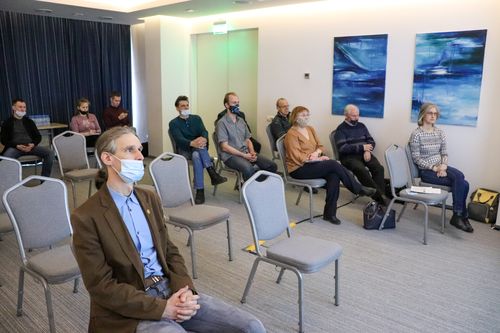
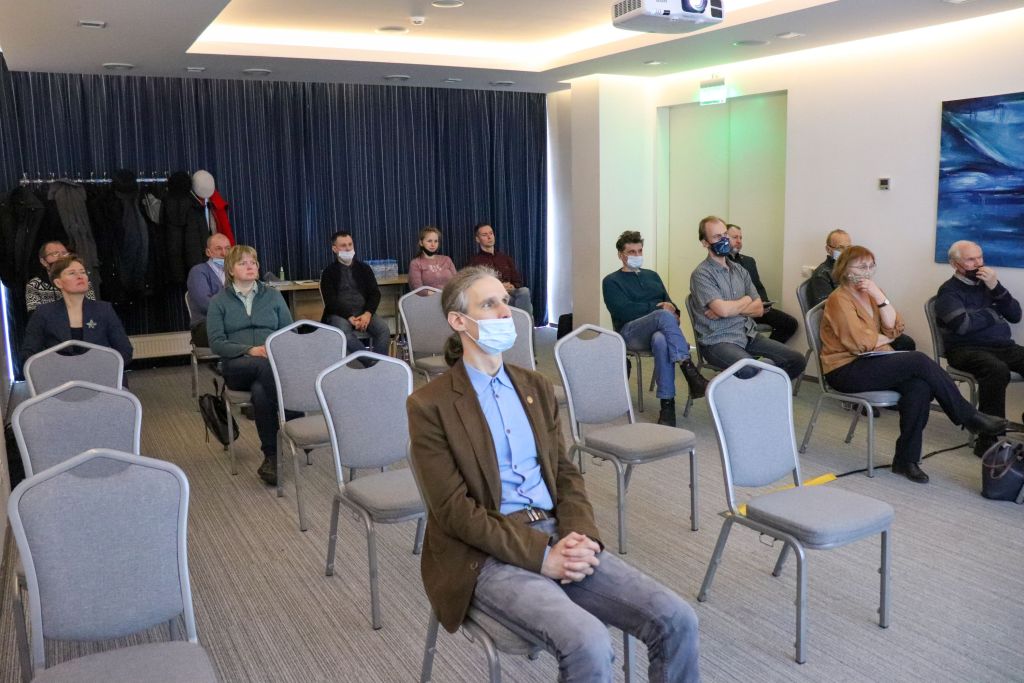
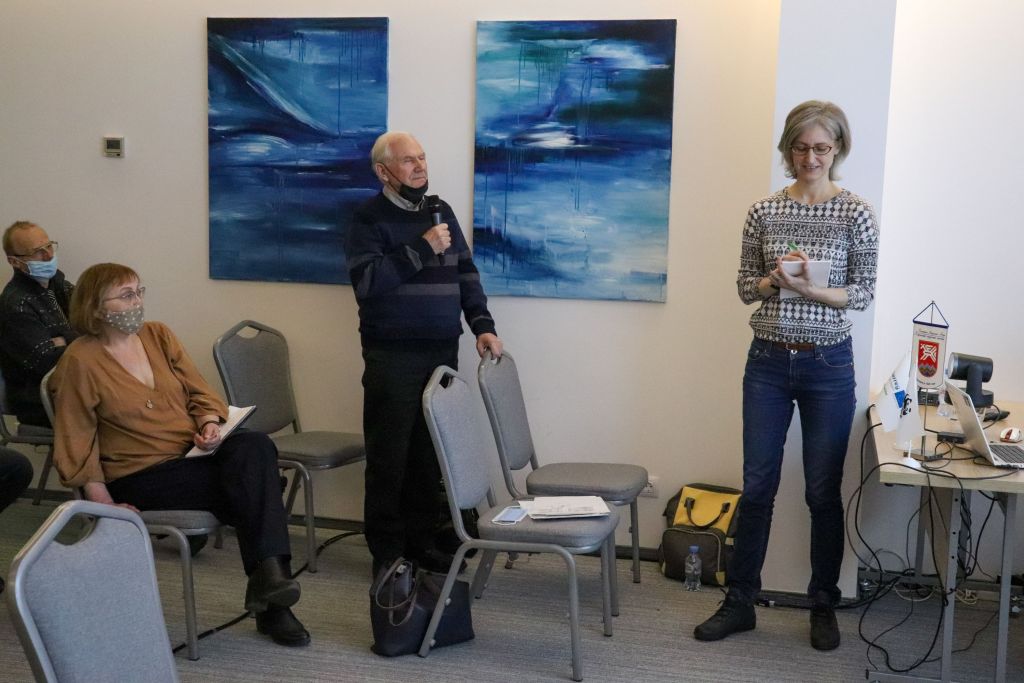
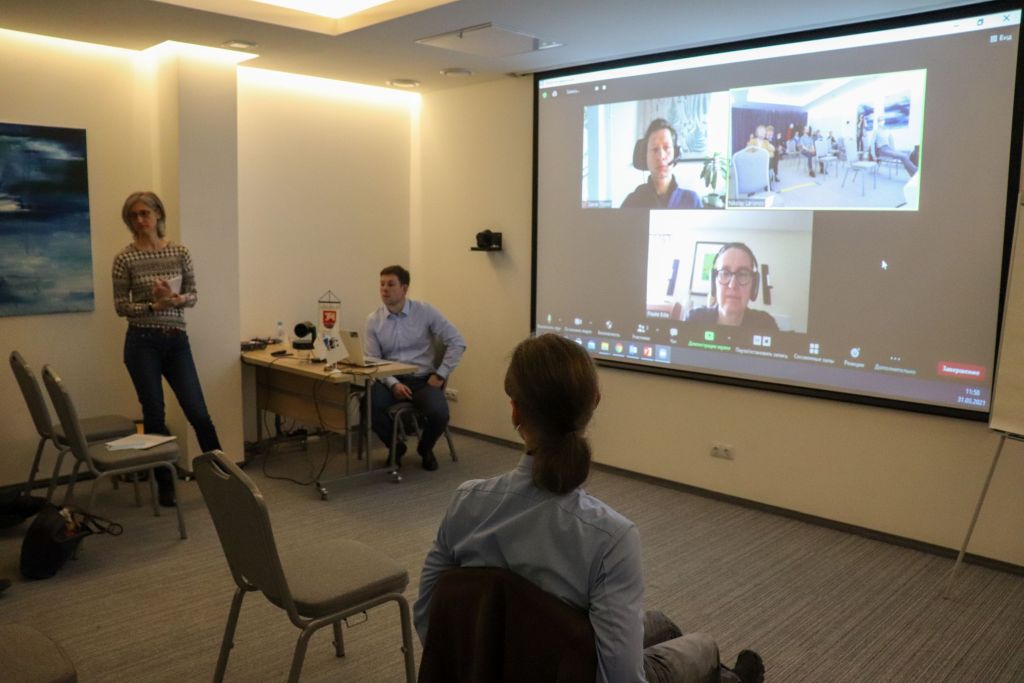
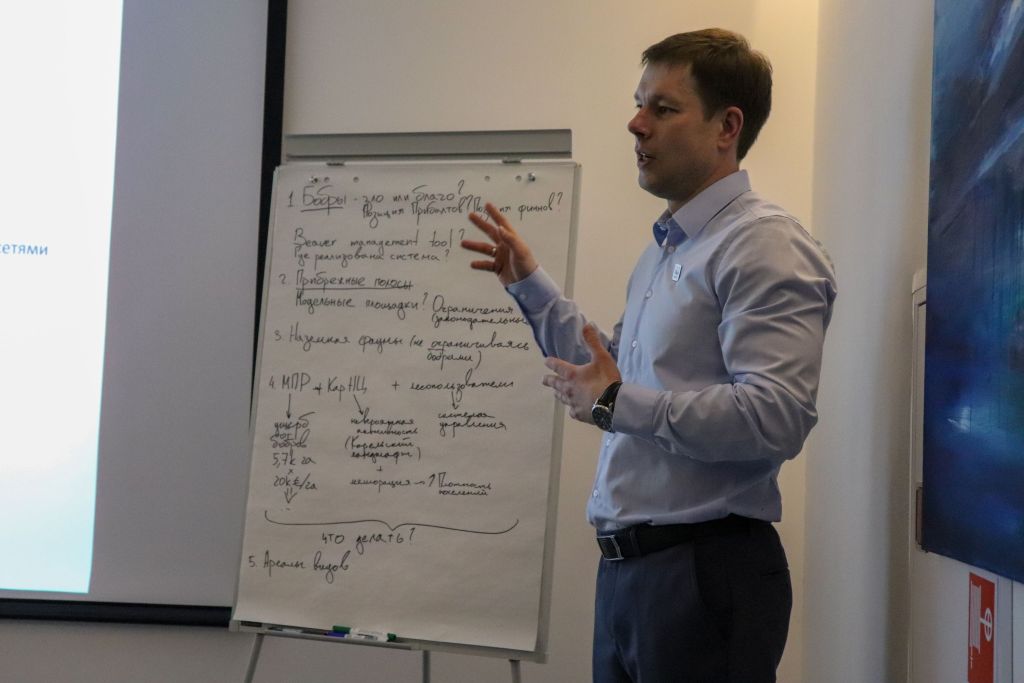
A workshop of the project “Water management in Baltic forests – Tool Box” (WAMBAF Tool Box, 2019-2021) took place in the capital of Karelia on March 31. It gathered representatives of the scientific community, environmental organizations, relevant authorities, forest leasers. They were introduced to the project results and the international action plan for water conservation in the Baltic Sea region, including an array of modern methods and tools for a more responsible forest management.
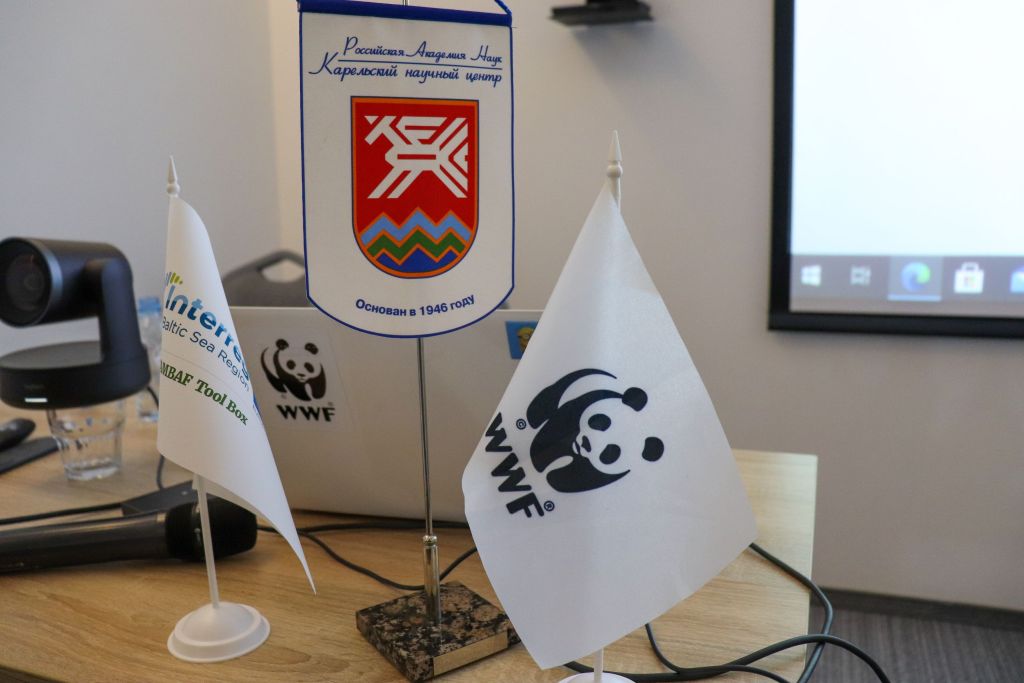
The aim of the WAMBAF Tool Box project is to promote forestry practices that reduce the input of nutrients and hazardous substances to regional and coastal waters in the Baltic Sea region. Karelian Research Centre RAS implements the project together with WWF Russia, Swedish Forest Agency, Metsähallitus, Latvian State Forest Research Institute and other partners within the international programme Interreg Baltic Sea Region.
A team of researchers collected and processed data to produce certain conclusions. As a result, an international action plan was worked out for countries in the Baltic Sea region. It has already been approved at a high level in the European Union. Many various stakeholders are involved in this work, are aware of it, and use it in their daily routines.
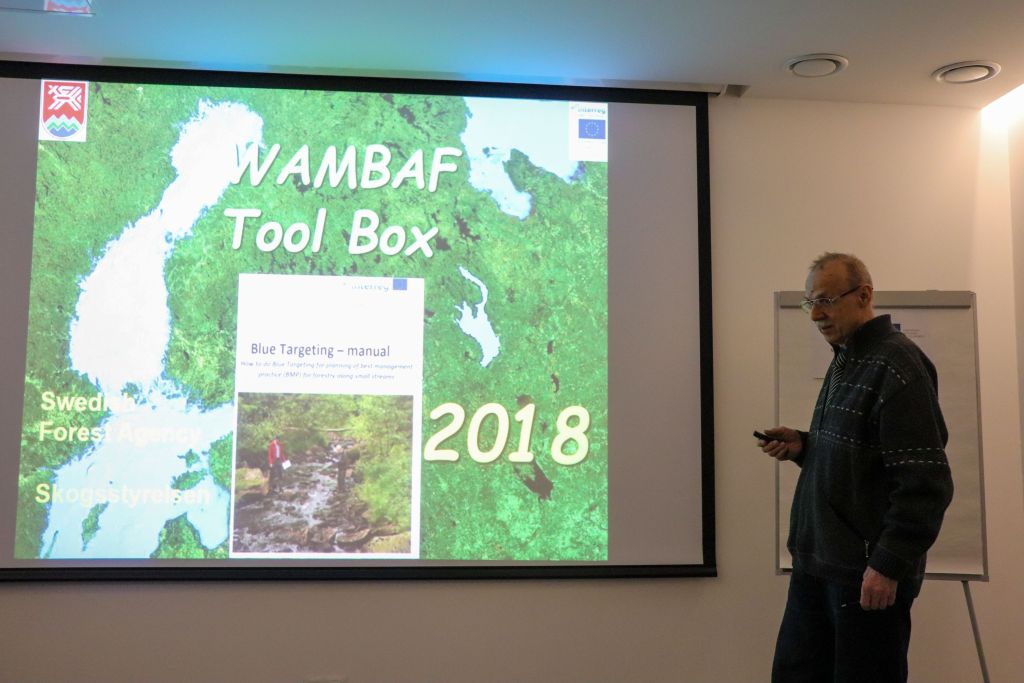
The role of the Karelian Research Centre in the project is to test and accommodate the European-designed Blue Targeting tool to being used in Northwest Russia. Blue Targeting is a checklist that is filled out in the field, when walking along a forest brook or a small river. It is formulated so that both scientists and laymen can use it (the field form can be downloaded with a mobile app) to evaluate the conservation value of the watercourse.
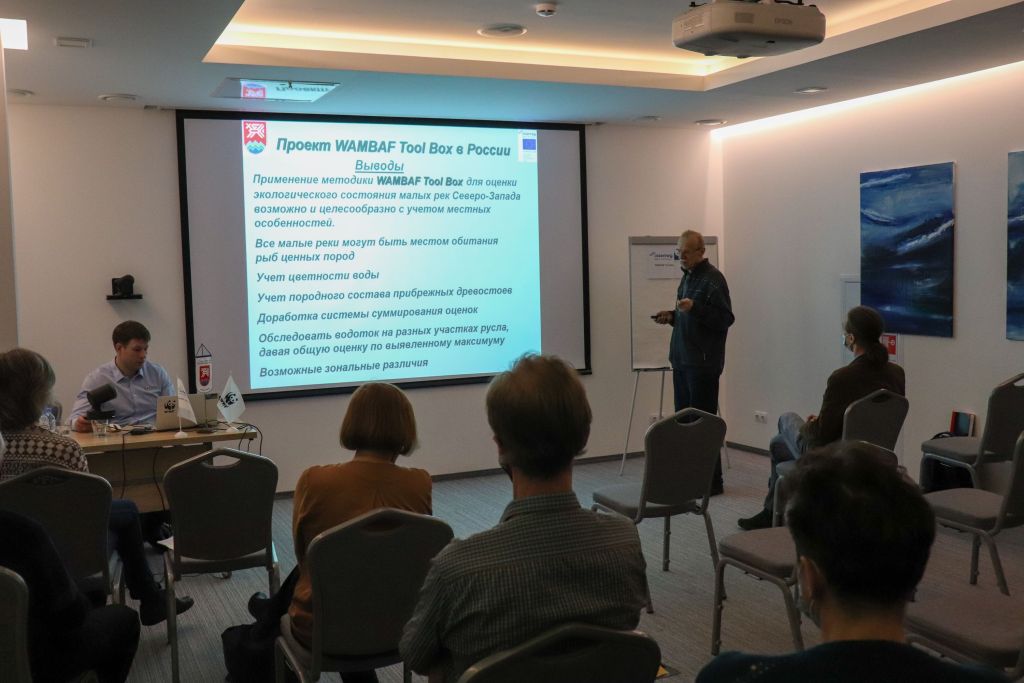
This summer, scientists from KarRC RAS put the European technique to test on small rivers of Northwest Russia. The results of the small river assessments done in 2019-2020 using the WAMBAF Tool Box technique in the Arkhangelsk Region and Karelia were presented at the workshop by Sergey Sin’kevich, Leading Researcher at the Laboratory for Boreal Forest Dynamics and Productivity. He summarized that the WAMBAF Tool Box technique can be advised for assessing the condition of small rivers in Northwest Russia given that local features are taken into account.
Talks were given at the workshop by foreign experts. Fraucke Ecke from the Swedish University of Agricultural Sciences (SLU) presented information on the “Beaver Tool” and sustainable management in beaver-inhabited areas, describing the criteria for making decisions about whether to keep or remove a beaver dam. Leena Finer, Professor from the Natural Resources Institute Finland (Luke), introduced the audience to “Drainage maintenance” aspects.
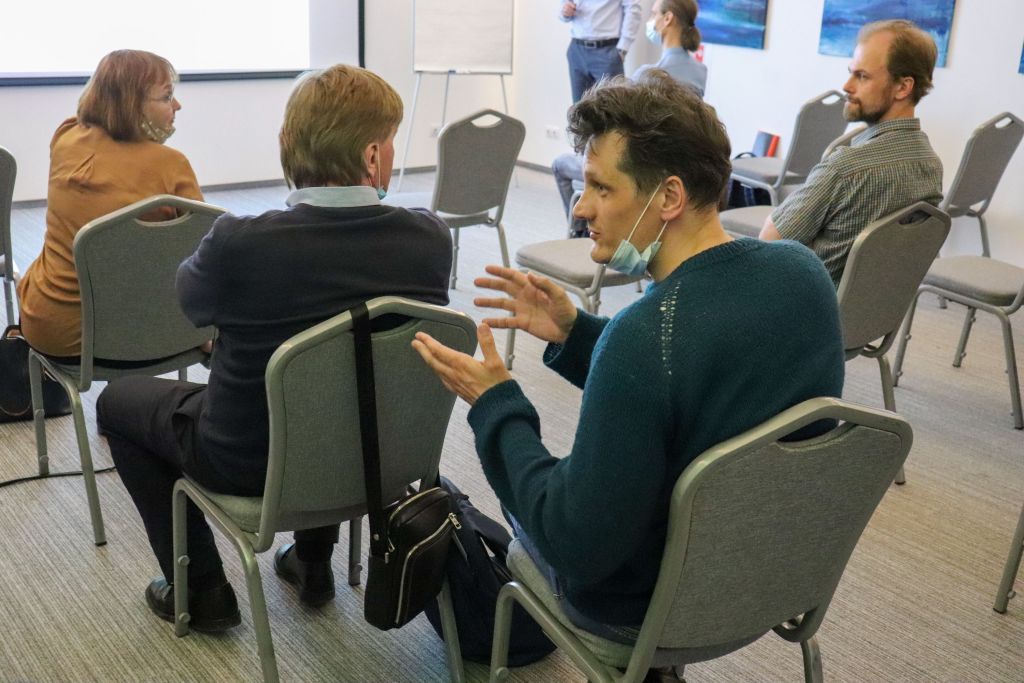
The workshop ended with a lively debate on the issues covered, and a discussion of the project plans for the nearest future. All WAMBAF Tool Box project material is openly available on the project website: https://www.skogsstyrelsen.se/en/wambaf
International
News
April 5, 2021
A workshop of the international WAMBAF-Tool Box project took place in Petrozavodsk. Its participants were introduced to the forestry practices that reduce the input of nutrients and hazardous substances to regional and coastal waters in the Baltic Sea region.


See also:

March 30, 2026
Young CIS scientists networked on common water problems at a school and workshop organized by the KarRC RAS
The international school and workshop “Under the Pressure of Global Climate Change: a Youth Network for Water Ecosystem Research” in Petrozavodsk has come to an end. During four days, young researchers from Russia, Belarus, Kyrgyzstan, Kazakhstan, Armenia, Uzbekistan, and Tajikistan listened to lectures and mastered scientific techniques in practice, under the guidance of seasoned experts. In conclusion, the participants agreed to maintain the network and keep looking for opportunities to jointly study common environmental problems.
The international school and workshop “Under the Pressure of Global Climate Change: a Youth Network for Water Ecosystem Research” in Petrozavodsk has come to an end. During four days, young researchers from Russia, Belarus, Kyrgyzstan, Kazakhstan, Armenia, Uzbekistan, and Tajikistan listened to lectures and mastered scientific techniques in practice, under the guidance of seasoned experts. In conclusion, the participants agreed to maintain the network and keep looking for opportunities to jointly study common environmental problems.

March 27, 2026
RAS Corr. Fellow Olga Bakhmet: Arctic biodiversity conservation is impossible without science as its foundation
The International Forum "Polar Bear Universe", organized by the Ministry of Natural Resources of Russia and the Government of the Chukotka Autonomous Okrug, is taking place in St. Petersburg. At the forum’s Bio-ecological Arctic Cluster, KarRC RAS leader, RAS Corr. Fellow Olga Bakhmet spoke about the scientific foundations for conserving Arctic biodiversity and presented the expertise of Karelian scientists in this field.
The International Forum "Polar Bear Universe", organized by the Ministry of Natural Resources of Russia and the Government of the Chukotka Autonomous Okrug, is taking place in St. Petersburg. At the forum’s Bio-ecological Arctic Cluster, KarRC RAS leader, RAS Corr. Fellow Olga Bakhmet spoke about the scientific foundations for conserving Arctic biodiversity and presented the expertise of Karelian scientists in this field.

March 26, 2026
Olga Bakhmet presented KarRC’s proposals for the federal Clean Ladoga project in St. Petersburg
Experts of the Karelian Research Centre RAS have prepared proposals for the federal project Clean Ladoga. The Centre’s CEO, Olga Bakhmet, presented them at a joint meeting of the Environmental Council under the Governor of St. Petersburg and the Public Environmental Council under the Governor of the Leningrad Region. The main point of her presentation was that the integrated program for the environmental rehabilitation of Lake Ladoga must encompass also the water bodies located throughout the lake’s catchment area.
Experts of the Karelian Research Centre RAS have prepared proposals for the federal project Clean Ladoga. The Centre’s CEO, Olga Bakhmet, presented them at a joint meeting of the Environmental Council under the Governor of St. Petersburg and the Public Environmental Council under the Governor of the Leningrad Region. The main point of her presentation was that the integrated program for the environmental rehabilitation of Lake Ladoga must encompass also the water bodies located throughout the lake’s catchment area.

March 24, 2026
A youth school and workshop on aquatic ecosystem studies gathers learners and lecturers from CIS countries at the KarRC RAS
The international school and workshop "Under the Pressure of Global Climate Change: a Youth Network for Aquatic Ecosystem Research" was launched in Petrozavodsk on March 24. Over four days, young researchers from Russia, Belarus, Kyrgyzstan, Kazakhstan, Armenia, Uzbekistan, and Tajikistan will engage in theoretical and practical training under the guidance of experts from the KarRC RAS and researchers from CIS countries, India, and China.
The international school and workshop "Under the Pressure of Global Climate Change: a Youth Network for Aquatic Ecosystem Research" was launched in Petrozavodsk on March 24. Over four days, young researchers from Russia, Belarus, Kyrgyzstan, Kazakhstan, Armenia, Uzbekistan, and Tajikistan will engage in theoretical and practical training under the guidance of experts from the KarRC RAS and researchers from CIS countries, India, and China.

March 16, 2026
Karelian entomologist, Andrei Humala, discovered six new species of parasitoid wasps last year
In 2025, entomologist from Karelia, Andrei Humala, described four new parasitoid wasp species from Africa. They all belong to a genus relatively rare in that region, Eusterinx. One more finding was made in each of samples from Mexico and Russian Far East. The scientist has specialized in the study of parasitoid wasps for over 30 years, during which time he has described 3 genera and 149 species new to science.
In 2025, entomologist from Karelia, Andrei Humala, described four new parasitoid wasp species from Africa. They all belong to a genus relatively rare in that region, Eusterinx. One more finding was made in each of samples from Mexico and Russian Far East. The scientist has specialized in the study of parasitoid wasps for over 30 years, during which time he has described 3 genera and 149 species new to science.